

The Hidden Threat of Foundation Water Damage
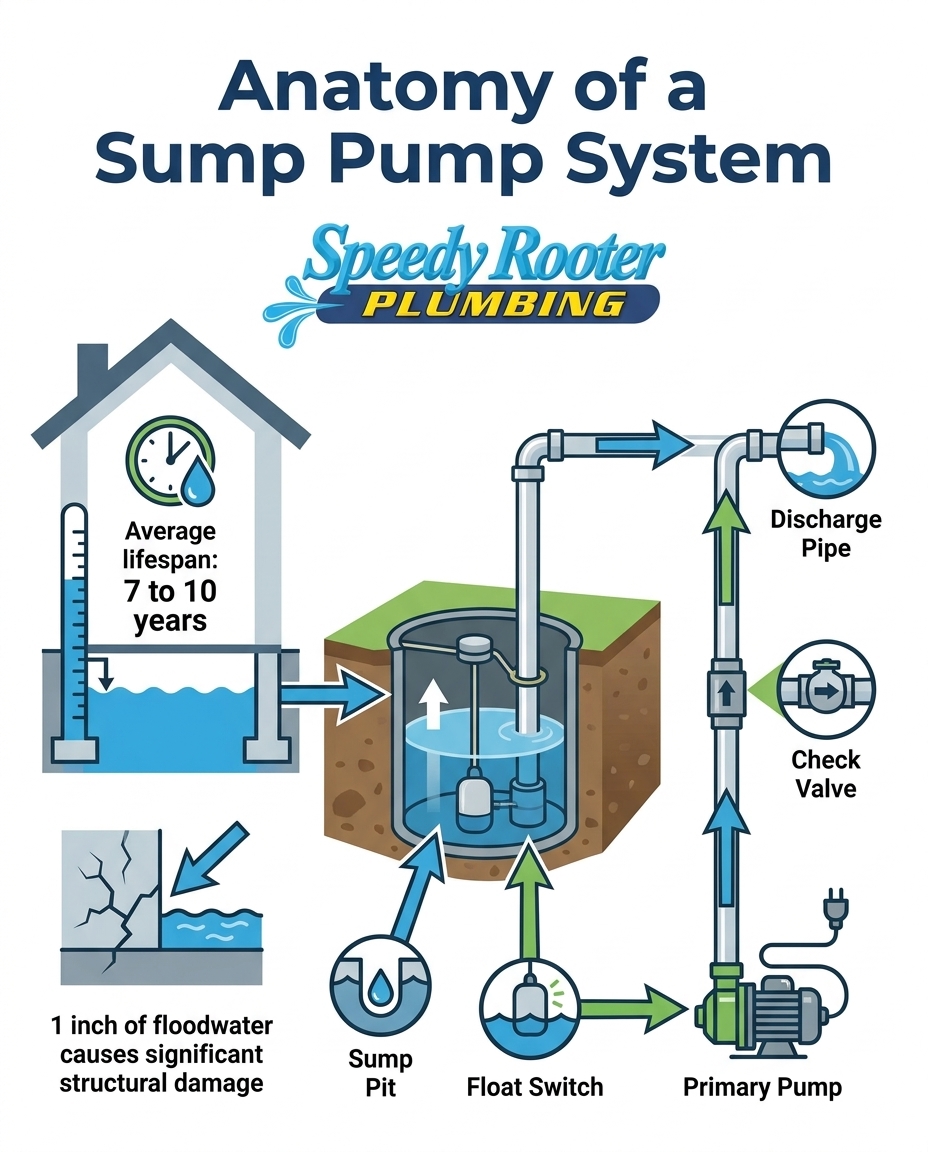
According to the Federal Emergency Management Agency (FEMA), just one inch of floodwater can cause significant structural damage to a home. Despite this staggering statistic, in our years of protecting homes throughout the local area, our team at Speedy Rooter Plumbing has seen firsthand how homeowners often lack understanding of how their sump pump actively protects their foundation until heavy rains cause a sudden system failure or widespread basement flooding. Your home’s foundation is under constant pressure from surrounding groundwater. Modern homes combat this invisible threat through active water management, relying on specialized equipment to safely channel moisture away from structural supports and living spaces.
Recognizing the early warning signs of a failing sump pump and knowing what basic maintenance a homeowner can safely perform—versus when to call our licensed plumbers before a storm hits—is a critical decision point for any property owner. Waiting until water is visibly pooling on your basement floor means the damage has already begun. By taking a proactive approach, you can secure your home against the costly and devastating effects of groundwater intrusion.
To establish a solid defense strategy, you can review the plumbing products available for modern water management, and start understanding your sump pump as the ultimate safeguard for your property.
What Is a Sump Pump? Exploring the Core Mechanics
A sump pump is an active plumbing device installed in the lowest part of a basement or crawlspace, designed specifically to collect excess groundwater and automatically pump it safely away from the home’s foundation. Acting as the heart of your home’s drainage system, this essential appliance works tirelessly to relieve hydrostatic pressure—the immense weight of water pushing against your foundation walls.
The journey of water management begins long before the pump ever turns on. As soil saturation increases around your property, perforated pipes known as drain tiles collect the excess moisture. These tiles rely on gravity to channel the water directly into a specially excavated basin called the sump pit. As the pit gradually fills with groundwater, the rising water lifts a buoyant component attached to the pump. Once the water hits a specific float switch engagement level, the pump is automatically triggered to activate.
Virginia regions like Charlottesville and Staunton experience heavy spring rains that rapidly saturate the ground, making this automatic mechanism absolutely essential for local homes. When the switch engages, a powerful impeller inside the pump forces the water up and out through a dedicated discharge pipe, routing it safely away from the foundation to a designated drainage zone. Understanding the complete role of sump pumps reveals that they are not just reactive tools for removing puddles, but active, continuous defenders of your home’s structural integrity.
Submersible vs. Pedestal Systems: Knowing the Difference
When evaluating your home’s water defense system, it is vital to know exactly what type of equipment is operating in your basement or crawlspace. Sump pumps generally fall into two primary categories: submersible pumps and pedestal pumps. Each design has distinct mechanical advantages, operational lifespans, and maintenance requirements.
| Feature | Submersible Sump Pump | Pedestal Sump Pump |
|---|---|---|
| Motor Location | Housed entirely inside the sump pit, operating underwater. | Mounted on a column above the pit, keeping the motor completely dry. |
| Noise Level | Very quiet, as the surrounding water and pit cover muffle the motor sound. | Noticeably louder, as the motor operates in the open air of the basement. |
| Power & Capacity | Generally more powerful; capable of moving higher volumes of water quickly. | Slightly less powerful; better suited for shallower pits and moderate water tables. |
| Cooling Mechanism | Relies on the surrounding groundwater to cool the motor, preventing overheating. | Relies on ambient air cooling; less risk of water intrusion into the motor housing. |
| Average Lifespan | Typically 7 to 10 years, depending on usage and water quality. | Often lasts longer (10+ years) because the motor is never submerged in water. |
Submersible pumps are the modern standard for homes dealing with significant groundwater intrusion. Based on our extensive experience replacing failed units, our team generally recommends submersible pumps for finished basements because their underwater design makes them exceptionally quiet. Because they sit at the bottom of the pit, they are highly efficient at pushing water upward and out of the discharge pipe. However, because they operate entirely underwater, the watertight seals protecting the motor will eventually degrade over time.
Pedestal pumps feature a long vertical shaft with the impeller at the bottom of the pit and the motor sitting safely above the floor line. While they tend to be noisier and take up more vertical space, they are incredibly easy to access for maintenance.
Regardless of which style you have, the quality of the manufacturing matters immensely. Big-box store consumer models are frequently constructed from lightweight thermoplastics and use lower-grade mechanical seals. While these might seem cost-effective initially, they often fail significantly faster than professional-grade equipment. Professional models are typically built with heavy-duty cast iron housings, stainless steel fasteners, and robust impellers designed to handle debris without jamming. Identifying whether your current system is a temporary consumer fix or a permanent professional installation is the first step in ensuring long-term reliability.
The Unsung Hero: Why Your Check Valve Matters
While the motor gets all the attention, there is a small, critical component on your discharge pipe that dictates the health and longevity of your entire system: the check valve. This vital piece of hardware is often misunderstood by homeowners, leading to premature system failure and unexpected flooding.
The Problem: Rapid Short-Cycling
When a sump pump activates, it pushes a heavy column of water up the vertical discharge pipe and out of the house. Once the water level in the pit drops, the float switch turns the motor off. If the system lacks a functioning check valve, gravity takes over instantly. All the water that was just pushed up the pipe comes rushing right back down into the sump pit. This sudden influx of water raises the float switch again, causing the pump to turn right back on. This rapid, continuous turning on and off is known as “short-cycling.”
The Cause: A Failing or Missing Check Valve
When our technicians respond to flooded basements, a pattern we see often is a missing or jammed check valve. The check valve is a one-way mechanical flap installed directly on the discharge pipe, usually just a few feet above the pump itself. Its sole purpose is to open when water is being pushed out, and instantly snap shut the moment the pump turns off. This traps the column of water in the pipe, preventing it from draining back into the pit. When a check valve becomes jammed with debris, loses its internal spring tension, or is simply never installed by a DIYer, the pump is forced to re-pump the exact same water over and over again.
The Solution: Protecting the Pump’s Lifespan
Short-cycling is a death sentence for an electric motor. The constant starting and stopping generates excessive heat, rapidly burning out the internal windings and degrading the mechanical seals. A faulty check valve can drastically reduce a pump’s average 7 to 10-year lifespan down to just a year or two. Ensuring you have a high-quality, perfectly functioning check valve is one of the most effective ways to protect your investment and guarantee your system is ready when the heavy rains arrive.
Recognizing the Warning Signs of Impending Pump Failure
In our experience, your sump pump will rarely fail without giving you a few subtle warning signs first. Educating yourself on how to spot a struggling system before a severe storm hits can mean the difference between a dry basement and a catastrophic flood. Watch and listen for these critical indicators:
- Strange and excessive noises: While a low hum is normal during operation, a loud grinding, rattling, or squealing sound is a massive red flag. Grinding usually indicates a jammed impeller or failing bearings, while rattling can mean the pump has vibrated loose from its mounting.
- Irregular cycling patterns: If your pump is running constantly even when the weather has been dry for days, it may be undersized for your water table, or the float switch may be physically stuck in the “on” position. Conversely, if the pit is overflowing but the pump fails to activate, the switch has likely failed completely.
- Visible rust and severe corrosion: While some surface discoloration is normal for cast iron pumps, thick, flaking rust or heavy mineral scale around the electrical entry point indicates that the waterproof housing is compromised.
- Sluggish water discharge: If the motor sounds like it is running at full speed but the water level in the pit is dropping very slowly, the impeller may be stripped, or there could be a partial blockage in the main discharge line.
It is also crucial to note the strong correlation between severe weather and primary pump failure. Severe summer thunderstorms in Virginia often bring a dangerous combination of high water volumes and sudden power outages. If your primary pump relies solely on the municipal power grid, a blackout leaves your basement completely unprotected right when you need it most. Ignoring any of these mechanical warning signs or failing to plan for power loss can quickly lead to common plumbing emergencies that require immediate, extensive intervention.
Why Professional Installation Outperforms DIY Approaches
With the rise of online tutorials, many homeowners are tempted to tackle plumbing replacements themselves. However, installing a sump pump is not a simple weekend project—it is a complex integration of hardwired electrical connections, precise plumbing codes, and fluid dynamics. The hidden dangers of a DIY installation can put your entire home at risk.
One of the most critical aspects of installation is proper basin sizing and pump calibration. If a pump is too small, it will run continuously and burn out trying to keep up with the water table. If it is too large, it will short-cycle rapidly, achieving the same destructive result. Speedy Rooter Plumbing’s established local expertise in handling Virginia’s specific groundwater challenges ensures that the right horsepower and pump style are perfectly matched to your property’s unique water table and soil composition.
Furthermore, discharge pipe routing requires strict adherence to local codes. An improperly pitched discharge line can easily freeze solid during a winter cold snap, creating a total blockage that forces water back into your basement. Worse, our team frequently corrects DIY installations where discharge lines are routed directly into the municipal sanitary sewer line—a major code violation that can inadvertently contribute to the neighborhood dealing with sewer backups during heavy rains.
Professional installation eliminates these risks. Licensed plumbers ensure that dedicated electrical circuits are safely established, check valves are correctly positioned, and discharge lines are routed to legal, effective drainage zones. This level of precision provides the ultimate peace of mind, backed by professional warranties that big-box store receipts simply cannot offer.
Routine Sump Pump Maintenance for Homeowners
While repairs and installations require a licensed professional, there are several safe, actionable maintenance steps homeowners can perform to keep their system in peak condition. Regular checks ensure that the mechanical components are free to operate when the water starts rising.
- Perform a visual inspection of the pit: Carefully remove or open the sump pit cover. Shine a flashlight inside to look for loose gravel, dirt, or foreign objects. It is surprisingly common for small children’s toys or laundry items to fall into the pit and physically jam the float switch against the basin wall.
- Safely test the system’s activation: During a dry week, you can verify that the pump works by slowly pouring a five-gallon bucket of clean water directly into the pit. Watch the float switch rise. The pump should turn on smoothly, drain the water quickly, and shut off completely once the water level drops.
- Monitor for organic buildup: Standing water can encourage the growth of iron bacteria and organic matter. This thick, slimy substance can coat the float switch, making it too heavy to float properly. Understanding the impact of biofilm in your drain and sump pit is essential for preventing foul odors and mechanical clogs.
- Inspect the exterior discharge point: Walk outside and locate where the pipe exits your home. Ensure the opening is completely free of leaves, mud, snow, or animal nests. Water must be able to flow freely away from the foundation.
- Schedule an annual professional inspection: Before the threat of heavy spring rain storms arrives, have a licensed plumber perform a comprehensive diagnostic check. They will test the electrical draw of the motor, inspect the check valve, and verify the integrity of the watertight seals.
Frequently Asked Questions About Sump Pumps
What is the main purpose of a sump pump?
The primary purpose of a sump pump is to collect excess groundwater from the soil surrounding a home’s foundation and actively pump that water away from the property. By relieving hydrostatic pressure, it prevents groundwater from seeping through microscopic cracks in the foundation walls. Ultimately, it serves as an active defense system to prevent basement and crawlspace flooding.
How do I know if my sump pump is working correctly?
You can verify your pump is working by listening for a smooth, consistent motor sound when it activates, without any grinding or rattling. To test it manually, pour a bucket of water into the basin until the float switch rises and triggers the motor. Finally, walk outside while it is running to visually confirm that water is successfully exiting the exterior discharge pipe.
How often should a sump pump run during a rainstorm?
The frequency of operation varies heavily based on your local soil saturation, the home’s elevation, and the intensity of the rainfall. During a heavy downpour, it is entirely normal for a pump to run every few minutes to keep up with the rising water table. However, if the pump is running continuously without ever stopping, it indicates a mechanical problem, a stuck switch, or an undersized pump struggling to meet the demand.
Do I really need a sump pump if my basement has never flooded?
Yes, because underground water tables can shift dramatically over time due to new neighborhood construction, changes in municipal drainage, or evolving weather patterns. Even if your basement has been historically dry, a sump system acts as a vital insurance policy against unexpected, severe weather events. It is far better to have the system in place before a sudden shift in groundwater causes catastrophic damage.
What happens if a sump pump fails during a storm?
If a pump fails during a heavy rain event, the incoming groundwater will rapidly fill the sump pit until it overflows directly onto the basement or crawlspace floor. This standing water can quickly ruin drywall, destroy flooring, and damage stored belongings. Furthermore, the lingering moisture creates the perfect environment for rapid mold growth and long-term structural decay.
Can a sump pump operate without electricity?
Standard primary sump pumps rely entirely on your home’s electrical grid, meaning they will not operate during a power outage. To maintain protection when the grid goes down, a dedicated battery backup system or a municipal water-powered backup pump is required. These secondary systems automatically take over when the main power fails, ensuring continuous foundation protection during severe storms.
Securing Your Home’s First Line of Defense
A dry, structurally sound home starts with proactive water management. Understanding that your sump pump is an active, essential foundation defense system—rather than just a reactive water removal tool—is the key to preventing devastating water damage. By familiarizing yourself with the core mechanics, recognizing the early warning signs of short-cycling or motor fatigue, and executing safe visual inspections, you take absolute control over your home’s safety.
A well-maintained, professionally installed system provides unparalleled peace of mind, even when the heaviest seasonal storms roll in. You deserve the confidence of knowing that your basement is fully protected by reliable, professional-grade equipment. Do not wait for the next severe weather warning to find out if your system is up to the task. Reach out to our local plumbing experts today for a comprehensive inspection or an essential system upgrade, and take the next step in understanding your sump pump and comprehensive drainage solutions.
More From the Blog
-
How Line Locating Services Prevent Catastrophic Remodeling Mistakes
Starting a yard excavation or basement remodel without mapping utilities carries massive hidden risks. See why professional line locating is a critical first step before any shovel hits the dirt.
-
Thanksgiving Drain Backups: The Anatomy of a Kitchen Sink Failure
Preparing for the Predictable Thanksgiving Plumbing Surge Thanksgiving morning brings a flurry of activity, with multiple dishes cooking, guests arriving, and the…
-
Septic Tank Pumping Frequencies for Ruckersville, VA Rural Properties
The Hidden Threat to Ruckersville Septic Systems Nearly 20% of rural American homes rely on independent wastewater systems, but when it comes…










24/7 Emergency Service
Contact Us Today
Contact Us Today
When in need of basic and emergency plumbing services, call Speedy Rooter Plumbing. We are the team that you can trust for services from a reliable plumber in Charlottesville, VA, and nearby areas. We have a committed team of well-trained professionals waiting to address your needs. Call us today or fill out the form on this site to schedule your appointment.