

Why Some Plumbing Clogs Keep Coming Back
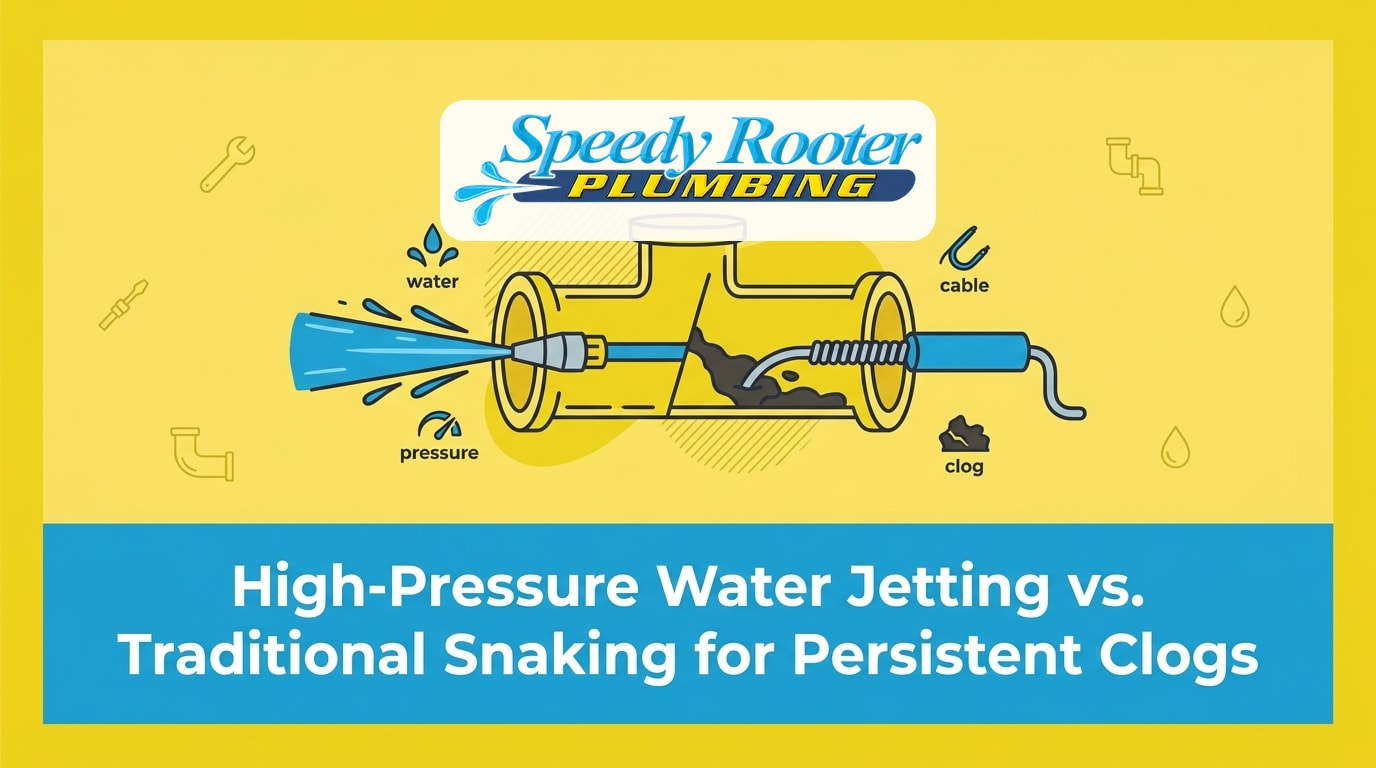
Are you frustrated by drains that slow down or back up just weeks after being cleared? Here at Speedy Rooter Plumbing, we often hear from homeowners who feel stuck in this exact cycle. When you are weighing High-Pressure Water Jetting vs. Traditional Snaking for Persistent Clogs, the choice ultimately comes down to the exact nature of the blockage inside your pipes. Many homeowners assume that a clog is just a clog, but the reality inside your plumbing system is much more complex. Differentiating between simple, localized blockages and stubborn, system-wide scale buildup is the key to stopping the cycle of recurring backups.
Resolving a drainage issue permanently requires choosing the right professional method rather than guessing at the solution. If a technician uses the wrong tool for the job, you might get a few weeks of relief before the exact same symptom returns. To clear a line effectively, professionals rely on two primary tools: the standard motorized drain auger (snake) and the high-pressure water jetter. Understanding how these tools work—and what they leave behind—will help you make an informed decision about your home’s maintenance.
If you need help with regular drain cleaning, a professional assessment is the best place to start.
The Frustration of the Quick Fix
In our years of serving the local area, we’ve found that a recurring clog is usually a symptom of a larger, untreated condition inside the pipe. When a drain is slow, water backs up, creating a breeding ground for bacteria and causing unpleasant odors to drift into your living spaces. Often, homeowners try chemical drain cleaners, which are highly corrosive and rarely reach the actual blockage. When those fail, they call for a basic clearing service. However, if the service only punches a small hole through a massive obstruction, the relief is temporary. The water drains for a few days, but the underlying debris quickly catches new material, sealing the pipe shut all over again.
This cycle of temporary fixes is not just frustrating; it adds unnecessary stress to your plumbing infrastructure. Every time water backs up, it exerts pressure on joints and seals. To break this cycle, the focus must shift from simply getting the water to drain to actually removing the root cause of the blockage. That requires understanding the mechanical differences between traditional snaking and advanced hydro-jetting.
The Mechanics of a Standard Motorized Drain Auger
The traditional method for clearing a blocked pipe relies on physical force. A standard motorized drain auger (snake) consists of a long, flexible, coiled metal cable wound around a drum. At the end of this cable is a specialized cutting head or hook. When activated by an electric motor, the cable rotates rapidly as it is fed down the drain line. The rotating head physically punches through, breaks up, or hooks onto a localized blockage.
Our plumbers can attest that this method is highly effective for isolated, simple clogs. If the obstruction is caused by a buildup of hair in a shower drain, paper products in a toilet line, or a foreign object accidentally dropped down the sink, the standard motorized drain auger is usually the perfect tool. The rotating cable grabs the solid mass, allowing the technician to pull it out or break it into pieces small enough to flush through the municipal sewer system.
Why Professional Operation is Mandatory
While the concept sounds simple, our team at Speedy Rooter Plumbing knows firsthand that operating a standard motorized drain auger safely requires extensive training. This equipment must only be handled by a licensed professional. The immense torque generated by the motor can easily cause the heavy metal cable to kink, snap, or thrash violently if it hits a solid obstruction or a collapsed pipe section. Furthermore, an untrained operator can easily push the cutting head through the side of an older, fragile pipe, turning a simple clog into a major excavation project. There are no safe do-it-yourself shortcuts when handling commercial-grade augers.
The Limitations of the Snake
Despite its effectiveness on solid objects, the standard motorized drain auger has a significant physical limitation. An auger merely punches a hole through soft, sludgy blockages. If your pipe is choked with grease, soap scum, or thick organic matter, the auger’s cutting head will bore a path right through the center of the sludge. This restores water flow temporarily, but it leaves the vast majority of the grease and residue clinging to the pipe walls. As soon as you run water, use the disposal, or take a shower, new debris immediately begins sticking to that remaining residue, explaining why your drain is clogged again so soon.
Scouring Pipe Walls with High-Pressure Water
When an auger is insufficient, professionals turn to hydro-jetting. This process fundamentally differs from traditional snaking because it uses water pressure rather than a metal cutting head to clear the line. A specialized machine pressurizes water and forces it through a heavy-duty hose equipped with a precisely engineered nozzle. The standard application uses 3,000 to 4,000 PSI water pressure to blast away obstructions.
The magic of hydro-jetting lies in the nozzle design. A typical jetting nozzle features one forward-facing jet to punch through the primary blockage, accompanied by multiple rear-facing jets. These rear jets serve two purposes: they propel the hose deep into the plumbing line, and they blast water in a 360-degree pattern inside the pipe. This completely scours the interior walls rather than just piercing a localized hole.
Restoring Pipe Capacity
Because hydro-jetting utilizes 3,000 to 4,000 PSI water pressure in a complete 360-degree arc, it strips away years of accumulated sludge, grease, and mineral scale. Instead of merely opening a small channel for water to pass through, jetting washes the debris entirely out of the system, pushing it down into the municipal sewer main. This method effectively restores the pipe to its near-original interior diameter and capacity, providing a long-term solution to slow drains.
Safety and System Integrity
Just like the motorized auger, high-pressure equipment must only be handled by a licensed professional. Blasting water at such intense pressures can easily damage frail, severely corroded, or heavily damaged pipes. Because of this risk, our technicians at Speedy Rooter Plumbing will always perform a thorough video camera inspection before hooking up the jetter. This inspection verifies the structural integrity of the pipe, ensuring it can withstand the scouring process without bursting or leaking.
The Impact of Fats, Oils, Grease, and Biofilm
To understand why hydro-jetting is often necessary, it helps to look at exactly what is building up inside your plumbing. Environmental factors and biological processes turn everyday waste into concrete-like blockages. A pattern we see often in our daily service calls is that the most common culprits in residential plumbing are Fats, Oils, and Grease—commonly referred to as FOG.
The Problem with FOG: FOG is a primary cause of residential blockages and sanitary sewer backups. When warm cooking oil, bacon grease, or even heavy dairy products are washed down the kitchen sink, they are in a liquid state. However, as they travel through the plumbing lines underneath your home or out to the street, they cool down. When FOG cools, it solidifies, clinging stubbornly to the walls of your pipes.
The Climate Connection: The cooling process is highly dependent on environmental factors. In regions like Virginia, seasonal temperature drops accelerate the hardening of FOG in residential plumbing lines. During the colder months, the ground temperature surrounding your exterior sewer lines plummets. When warm grease hits these freezing pipes, it congeals almost instantly, turning minor buildup into stubborn scale that chokes off the water flow. This seasonal reality makes hydro-jetting a necessity for many homes preparing for or recovering from winter.
The Role of Biofilm
Alongside FOG, plumbing systems battle a biological issue known as biofilm. Biofilm is a sticky, biological slime composed of bacteria, organic waste, and moisture that naturally forms on the damp interior walls of drain pipes. Over time, this slime layer traps passing debris—food particles, hair, soap scum, and minerals—creating a thick, restrictive coating that narrows the pipe diameter. Understanding the presence of biofilm in your drain is crucial for long-term plumbing health.
The Solution: A traditional standard motorized drain auger (snake) is entirely ineffective against FOG and biofilm. The metal cable simply spins through the soft center of the grease and slime, acting only as a temporary bandage. The 3,000 to 4,000 PSI water pressure used in hydro-jetting is the only reliable way to cut through the hardened FOG and strip the sticky biofilm completely off the pipe walls, preventing immediate recurrence.
Comparing Hydro-Jetting vs. Traditional Snaking
Choosing between these two methods does not have to be a guessing game. By looking at the specific symptoms your plumbing is exhibiting, a professional can determine exactly which tool will provide a permanent fix. Understanding what causes recurring clogs in your specific home dictates the proper response.
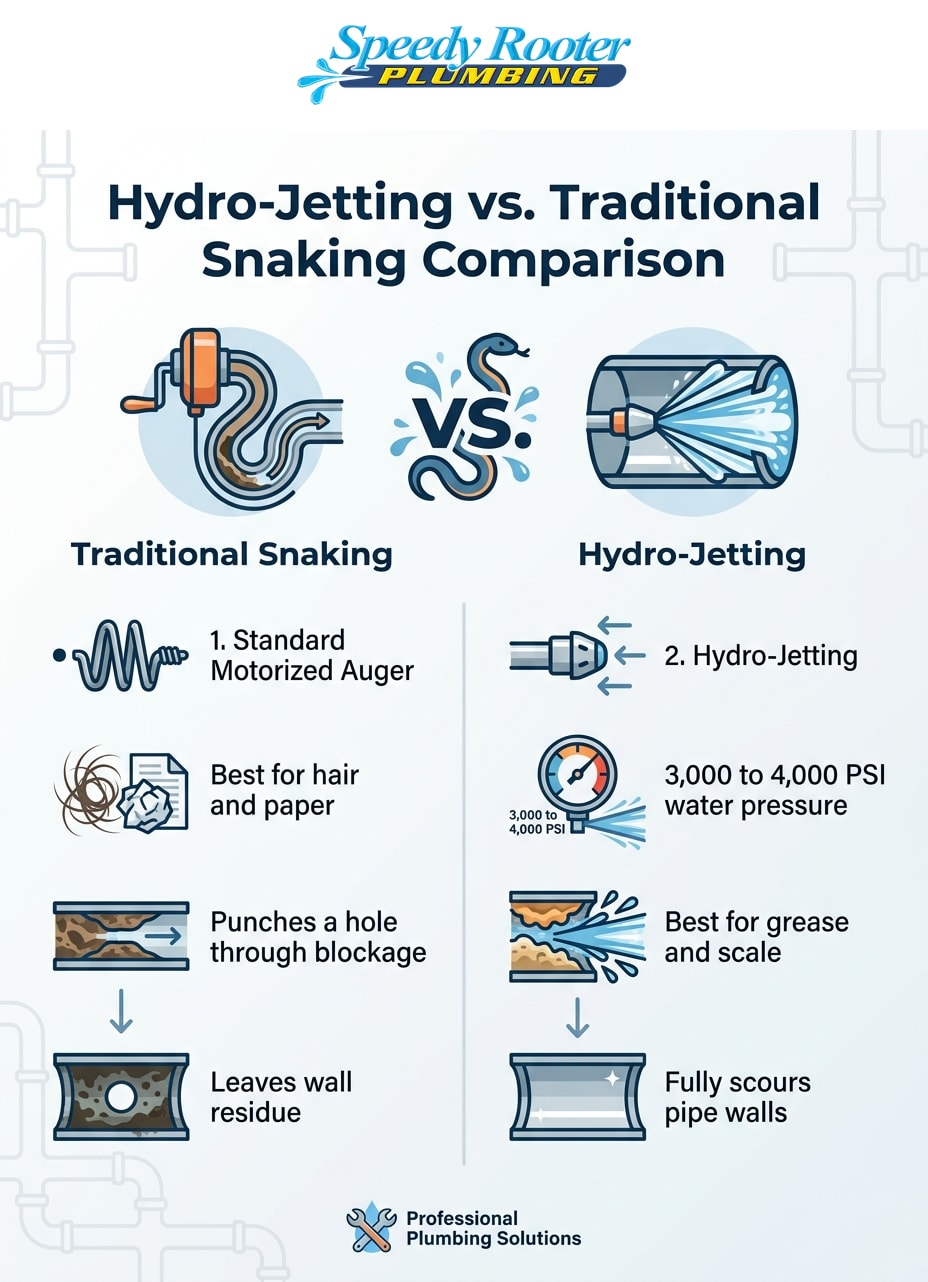
Here is a clear, symptom-based breakdown comparing the two methods:
| Feature | Traditional Snaking (Motorized Auger) | High-Pressure Hydro-Jetting |
|---|---|---|
| Mechanism | Physical force: A coiled metal cable rotates to punch a hole or hook onto a blockage. | Water pressure: 3,000 to 4,000 PSI water blasts in a 360-degree pattern to scour walls. |
| Best For | Isolated, simple clogs (hair, paper products, feminine hygiene products, dropped objects). | System-wide buildup, heavy grease (FOG), mineral scale, sludge, and biofilm. |
| Impact on Pipe Walls | Leaves residue behind; only clears a path the width of the cutting head. | Fully scours the interior, restoring the pipe to near-original capacity. |
| Limitations | Ineffective against heavy grease and sludge; acts as a temporary fix for scale. | Requires sturdy pipes; cannot be used on compromised, frail, or collapsed lines. |
| Diagnostic Need | Often used as a first-line defense or exploratory tool. | Always requires a prior camera inspection to verify structural integrity. |
A Diagnostic Approach to Drain Clearing
At Speedy Rooter Plumbing, one of the most important aspects of our diagnostic approach is recognizing that not every clog requires the most intensive method. A slow shower drain caused by a clump of hair does not need 3,000 to 4,000 PSI water pressure to resolve. Treating every slow drain with heavy-duty equipment is unnecessary and wasteful. This is why a diagnostic approach is vital to maintaining your home’s infrastructure.
Before any major clearing work begins, the importance of a professional camera inspection cannot be overstated. A technician feeds a high-resolution, waterproof camera down the drain line to visually inspect the interior of the pipe. This live video feed reveals the exact nature of the symptom. It shows whether the blockage is a solid object, a belly in the pipe holding water, invasive tree roots, or a thick layer of grease and scale.
Protecting Your Home and Your Wallet
Honest, transparent diagnostics mean recommending cost-effective snaking for simple blockages and only escalating to hydro-jetting when severe grease or scale is visually verified. Our team will walk you through the camera footage, explaining exactly what we see. If a standard motorized drain auger (snake) will permanently resolve the issue, that is the tool we will recommend.
This symptom-based approach provides deep reassurance. It prevents under-treating the root issue—which leads to recurring backups—and it protects you from overpaying for unnecessary, high-intensity services when a simple mechanical clearing would suffice. You get exactly the service your home needs, backed by visual evidence.
Common Questions About Drain Clearing Methods
Is hydro jetting better than snaking?
It is not universally better; rather, it is highly specialized. Hydro-jetting is the superior choice for severe scale, heavy grease, and biofilm buildup that coats the pipe walls. However, a standard motorized drain auger (snake) is perfectly adequate—and often the preferred method—for simple, localized clogs like hair or paper products. The “better” method depends entirely on the material causing the blockage.
Can hydro jetting damage pipes?
Yes, if the pipes are old, frail, or compromised, high pressure can cause damage. The 3,000 to 4,000 PSI water pressure used in hydro-jetting is powerful enough to exploit existing cracks or weak joints in deteriorating plumbing. This is exactly why a professional camera inspection is always required first to verify the pipe’s structural integrity before any jetting begins.
When is hydro jetting necessary instead of snaking?
Hydro-jetting becomes necessary when a drain line is choked with fats, oils, grease (FOG), or heavy mineral scale. If a drain continues to back up shortly after being snaked, it usually indicates that the pipe walls are coated in sludge. Jetting is required in these instances because it scours the entire circumference of the pipe, whereas an auger only punches a narrow hole through the center of the sludge.
Can a plumber’s snake clear grease and scale?
No, an auger is highly ineffective against heavy grease and scale. A standard motorized drain auger (snake) will only punch a temporary hole through soft, sludgy buildup. As soon as the cable is removed, the majority of the grease and biofilm remains intact on the pipe walls, ready to trap new debris and cause another backup within days or weeks.
Does snaking push the clog further?
In some cases, if not done correctly by a trained professional, an auger can push solid debris deeper into the plumbing system. However, when operated correctly, the specialized cutting head on the end of the cable typically hooks the blockage to retrieve it, or breaks it apart into pieces small enough to flow harmlessly into the municipal sewer line.
Get an Expert Diagnosis for Your Persistent Clogs
Permanent relief from recurring clogs depends entirely on matching the right tool to your specific blockage. Whether your system requires the targeted physical retrieval of a standard motorized drain auger (snake) or the comprehensive wall-scouring power of 3,000 to 4,000 PSI water pressure, guessing simply leads to temporary fixes and unnecessary frustration.
Don’t let a stubborn drain dictate your daily routine or put your plumbing infrastructure at risk. The most effective step you can take is to schedule a professional diagnostic camera inspection to determine your exact needs. By identifying the root cause visually, you ensure the problem is solved correctly the first time. If you are tired of temporary solutions, reach out to the Speedy Rooter Plumbing team for an honest assessment and get help dealing with recurring clogs today.
More From the Blog
-
How Line Locating Services Prevent Catastrophic Remodeling Mistakes
Starting a yard excavation or basement remodel without mapping utilities carries massive hidden risks. See why professional line locating is a critical first step before any shovel hits the dirt.
-
Thanksgiving Drain Backups: The Anatomy of a Kitchen Sink Failure
Preparing for the Predictable Thanksgiving Plumbing Surge Thanksgiving morning brings a flurry of activity, with multiple dishes cooking, guests arriving, and the…
-
Septic Tank Pumping Frequencies for Ruckersville, VA Rural Properties
The Hidden Threat to Ruckersville Septic Systems Nearly 20% of rural American homes rely on independent wastewater systems, but when it comes…










24/7 Emergency Service
Contact Us Today
Contact Us Today
When in need of basic and emergency plumbing services, call Speedy Rooter Plumbing. We are the team that you can trust for services from a reliable plumber in Charlottesville, VA, and nearby areas. We have a committed team of well-trained professionals waiting to address your needs. Call us today or fill out the form on this site to schedule your appointment.