



Are You Facing a True Plumbing Emergency Right Now?
Are you currently trying to figure out what constitutes a true 24-hour plumbing emergency while staring at a sudden leak in the middle of the night? At Speedy Rooter Plumbing, our team has answered countless late-night calls across the local area, and we know firsthand that discovering a plumbing issue outside of normal business hours is an incredibly stressful experience that leaves most homeowners feeling helpless. Your heart races, the water keeps flowing, and your first instinct is usually to grab your phone and frantically search for a 24 hour plumber. However, making a panic-driven decision in the heat of the moment can lead to unnecessary stress, rushed choices, and unexpected expenses. The critical decision point you face right now is determining whether you actually need to request immediate overnight dispatch, or if you can safely shut off the local water supply and wait for the morning. Clarifying this distinction is the first step to regaining control of your home.
Understanding the difference between a minor inconvenience and a full-blown catastrophe takes the guesswork out of an after-hours crisis. When you know how to assess the situation calmly, you protect your property without falling victim to panic. If you are dealing with common plumbing emergencies, having a clear action plan for what to do during a sewer backup or a sudden leak makes all the difference.
The Triage Test: Inconvenience vs. Catastrophe
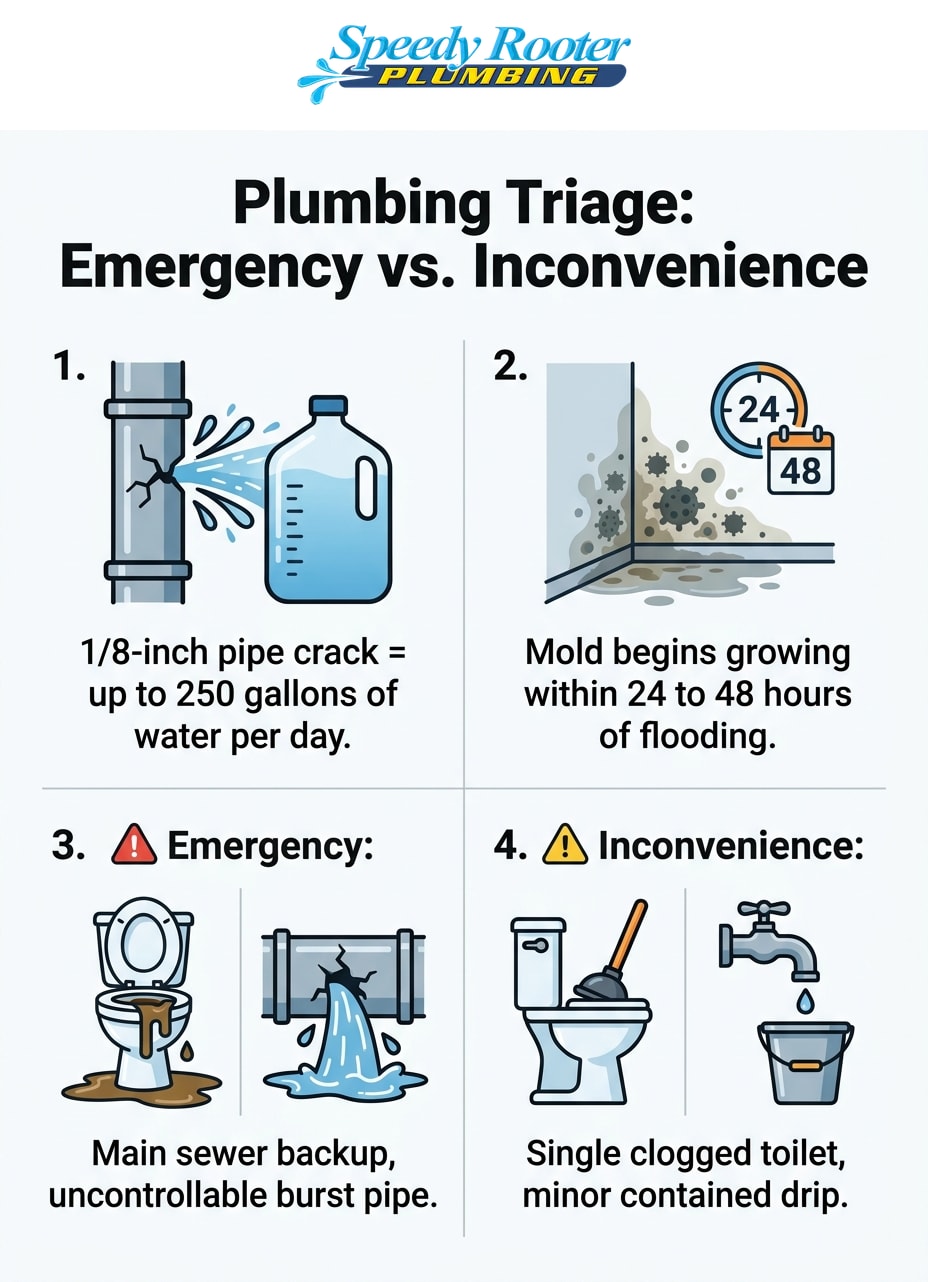
When water is misbehaving in your home, every minute feels critical. However, based on our years of experience responding to local emergencies, we have found that the vast majority of after-hours plumbing calls actually fall into the category of an inconvenience rather than a true catastrophe. An inconvenience is a localized problem: a single clogged toilet when you have another functional bathroom, a slow drain in the kitchen sink, or a minor drip under a vanity. These issues are frustrating, but they do not actively threaten the structural integrity of your home. A catastrophe, on the other hand, involves uncontrollable water or hazardous waste entering your living space, such as a main sewer line backup or a burst pipe that cannot be isolated.
A key benchmark for urgency is the 24-to-48-hour window for mold and secondary water damage. If water is actively soaking into your drywall, pooling under your laminate flooring, or dripping through your ceiling, the clock is ticking. Empowering yourself to make an informed decision rather than a panic-driven one requires a clear understanding of what you are looking at. If you are unsure about the severity of the situation, reviewing the most critical types of emergency plumbing in homes can help you classify the event.
| Plumbing Issue | Classification | Immediate Action Required | Urgency Level |
|---|---|---|---|
| Single clogged toilet | Inconvenience | Turn off the valve behind the toilet and use another bathroom. | Low (Wait for standard hours) |
| Dripping faucet or showerhead | Inconvenience | Place a bucket underneath if necessary. | Low (Wait for standard hours) |
| Burst supply pipe | Catastrophe | Attempt to shut off the main water valve immediately. | High (Requires immediate dispatch if valve fails) |
| Main sewer line backup | Catastrophe | Stop running all water in the house immediately. | Critical (Requires 24-hour plumber) |
| Water heater leaking heavily | Catastrophe | Shut off the cold water supply to the tank and turn off the power. | High (Dispatch required to prevent flooding) |
When It Can Safely Wait Until Morning
We routinely advise our customers that a plumbing issue can safely wait until normal business hours if it is an isolated event where the water flow can be completely stopped at the local fixture. For example, if a sink supply line is leaking, you can simply reach under the cabinet and turn the small oval-shaped shut-off valves clockwise until the water stops. Once the water is contained and the flow is halted, the immediate threat to your property is over. Furthermore, if you have alternative facilities available—such as a second functional bathroom when the primary toilet is out of commission—you can comfortably delay service until the next day, avoiding emergency dispatch fees.
When Immediate Action is Non-Negotiable
Immediate action is absolutely non-negotiable when you are dealing with issues involving raw sewage backing up into the home. Sewage carries hazardous bacteria and pathogens that pose a severe health risk to your family, and it requires specialized sanitation and immediate stoppage. Similarly, uncontrollable water flow that threatens the home’s structural integrity or electrical systems demands an urgent response. If a pipe bursts inside a wall and you cannot physically access or turn off the main water supply, every passing minute allows gallons of water to destroy insulation, drywall, and framing. In these scenarios, hesitation leads to exponential property damage.
Identifying the Signs of Active Indoor Flooding
Active indoor flooding is the most urgent type of plumbing emergency a homeowner can face, and it requires immediate professional intervention to save the property from ruin. Many homeowners underestimate just how fast water can accumulate. Our technicians frequently see cases where a seemingly minor 1/8-inch crack in a pressurized water pipe releases up to 250 gallons of water in a single day. That is the equivalent of leaving a garden hose running directly onto your living room floor. When water escapes at that volume, the structural components of your home begin to absorb the moisture immediately, leading to swelling, warping, and eventual collapse.
Recognizing the signs of active indoor flooding early can mean the difference between a simple cleanup and a massive renovation project. If you notice any of the following symptoms, you must act quickly to mitigate the damage before a professional arrives.
- Rapidly pooling water: Water spreading quickly across hard flooring or rising through carpeting indicates a severe, pressurized leak.
- Water cascading through ceilings: If water is dripping or pouring from a ceiling light fixture or a bulging patch of drywall, a pipe has likely failed in the floor above.
- Sudden drops in overall water pressure: If you turn on a faucet and only get a weak trickle, a massive leak somewhere else in the system is diverting the water flow.
- Unexplained sounds of rushing water: Hearing water running behind walls when all fixtures are turned off is a definitive sign of a hidden burst pipe.
The hidden risks of water traveling behind drywall and under flooring are immense. Water naturally follows the path of least resistance, wicking up insulation and spreading across subfloors far from the original source of the leak. By the time you see a wet spot on the ceiling, the water may have already traveled several feet horizontally along a joist. If you experience these signs and cannot locate or successfully shut off the main water valve, this is a definitive emergency. Understanding the dangers of undetected water leaks reinforces why active indoor flooding must never be ignored or left until morning.
Weather-Triggered Catastrophes: Freezing Temperatures and Heavy Rainstorms
Plumbing systems do not exist in a vacuum; they are highly susceptible to the environment around them. Local extreme weather events are a primary catalyst for sudden, unavoidable plumbing emergencies that strike without warning. Freezing overnight temperatures, for instance, are a notorious trigger for sudden pipe bursts, especially in poorly insulated areas like crawlspaces, unheated garages, and exterior walls. When the temperature drops below freezing, the water resting inside your pipes turns to ice and expands. This expansion creates immense pressure between the ice blockage and the closed faucet, eventually causing the copper or PVC pipe to rupture violently. Because temperatures typically reach their lowest point in the middle of the night, these bursts almost always become a frantic search for a 24 hour plumber at 3:00 AM.
Similarly, heavy rainstorms present a completely different but equally devastating threat to your home. When torrential downpours hit the local area, our dispatch board often lights up because the sheer volume of stormwater can easily overwhelm municipal sewer systems. When the city lines reach maximum capacity, the excess water and raw sewage have nowhere to go but backward. This reverse flow pushes up through your residential main sewer line, eventually erupting out of the lowest drains in your home—usually a basement floor drain, a lower-level shower, or a ground-floor toilet. This is a catastrophic event that introduces dangerous pathogens into your living space.
Because these weather events often strike outside of normal business hours, they drastically escalate the urgency of the situation. You cannot control the weather, but you can practice proactive monitoring. When extreme freezing temperatures or heavy rainstorms are in the local forecast, take preventative measures. Disconnect your exterior garden hoses, leave cabinet doors open under sinks to allow warm air to circulate near exterior walls, and ensure your sump pump is fully operational before the first drop of rain falls.
How to Safely Mitigate Damage While You Wait
If you have determined that your situation requires professional help, there are still critical steps you must take to protect your home while the technician is en route. Empowering yourself to perform safe damage control prevents a bad situation from becoming a devastating one. However, it is vital to understand the line between safe mitigation and dangerous DIY attempts. Your goal is stabilization, not restoration.
- Locate and turn off the main water shut-off valve: This is the single most important action you can take. The main valve is typically located near the perimeter of the house, in a basement, utility closet, or near the water meter. Turn a wheel valve clockwise until it stops, or pull a lever valve so it sits perpendicular to the pipe. This instantly stops all pressurized water from entering the home.
- Turn off the water heater: Once the main water supply is shut off, your water heater can no longer refill. If the tank drains empty while the heating elements are still turned on, the unit can severely damage itself or even pose a fire hazard. Turn off the gas valve or flip the dedicated electrical breaker for the water heater.
- Begin safe water removal techniques: Use heavy towels, mops, or a wet/dry vacuum to extract as much standing water as possible. Removing water quickly reduces the chance of moisture wicking up into your drywall and baseboards, significantly lowering the risk of secondary mold growth.
- Open windows for ventilation: If the weather permits, open windows and set up oscillating fans to encourage airflow over damp areas.
- Strictly avoid dangerous DIY repairs: Under no circumstances should you attempt to repair a burst pressurized pipe, snake a main sewer clog with improvised tools, or perform any work that requires a licensed professional. Improper DIY repairs can cause further damage, void your homeowner’s insurance, and result in severe injury.
Protecting Yourself from Predatory After-Hours Scams
A plumbing crisis in the middle of the night creates a perfect storm of panic, urgency, and vulnerability. Unfortunately, there are unscrupulous operators in the industry who view an after-hours emergency not as a chance to help, but as an opportunity to exploit a stressed homeowner. Panic-driven decisions make you vulnerable to predatory tactics, which is why taking a deep breath and triaging your situation is your best defense.
Recognizing the common red flags of a predatory operator can save you from a financial nightmare. Be extremely wary of any company that exhibits a flat refusal to explain their pricing structures over the phone. While a dispatcher cannot give an exact quote without seeing the problem, they should absolutely be able to explain their dispatch fee, their after-hours rates, and how they calculate their labor. Another major red flag is fear-mongering. If a technician arrives and immediately claims your entire house is in danger of structural collapse or insists on an immediate, massive overhaul (like repiping the whole house at 2 AM) instead of focusing on temporary stabilization, you should be highly suspicious.
This is where the value of a transparent triage process truly shines. A reputable company will actually tell a customer when they DO NOT need immediate, expensive after-hours service. Having spent years building trust in the local area, our team at Speedy Rooter Plumbing believes in honest and transparent emergency dispatching. Our commitment is to help you avoid unnecessary after-hours fees by accurately diagnosing if an issue can safely wait until morning. We prioritize accurate diagnosis and temporary stabilization over immediate high-margin visits. We strongly encourage choosing a trusted local expert who treats your home with respect. For more insight into these deceptive practices, educate yourself on how plumber scams work during after-hours emergencies.
Comprehensive FAQ: Navigating 24-Hour Plumbing Emergencies
What is considered a plumbing emergency?
A true plumbing emergency is any situation involving active indoor flooding, raw sewage backup, or a direct risk to the structural integrity of the home. These events require immediate professional intervention because they cause exponential property damage by the minute. If you cannot shut off the main water supply to stop a massive leak, or if hazardous waste is entering your living space, you are facing a definitive emergency that warrants an after-hours dispatch.
Can a leaking pipe wait until morning?
Yes, a leaking pipe can often wait until morning if the water can be completely shut off at the local fixture or the main valve, and the escaped water is fully contained. If you can place a bucket under a dripping P-trap or turn off the supply line to a leaking sink, the immediate threat is neutralized. Once the flow is stopped, you can safely schedule a standard daytime appointment without incurring emergency fees.
How do I stop a plumbing emergency?
The most critical step to stopping a plumbing emergency is locating and turning off the main water shut-off valve to halt the flow of pressurized water. Once the main valve is closed, open the lowest faucet in your home (usually a basement sink or exterior hose bib) to drain the remaining water from the pipes. This simple action instantly converts an active flooding catastrophe into a contained situation that can be managed calmly.
What to do if a pipe bursts at night?
If a pipe bursts at night, you must shut off the main water supply immediately to stop the flooding. Next, turn off the power or gas supply to your water heater to prevent the heating elements from burning out in an empty tank. Once the water is off and the area is secured, begin cleaning up the standing water with towels or a wet vac, and call a professional for emergency dispatch to repair the broken line.
How do you know if a plumbing issue is serious?
Signs of a serious plumbing issue include rapid water accumulation across floors, strong sewage odors permeating the house, and multiple fixtures backing up simultaneously. If you flush an upstairs toilet and water gurgles up into a downstairs shower, you have a severe blockage in your main sewer line. Any issue that involves uncontrollable water, hazardous waste, or a sudden, severe drop in overall home water pressure should be treated as highly serious.
Is a clogged toilet an emergency?
Generally, a clogged toilet is not an emergency unless it is overflowing uncontrollably onto the floor or it is the only toilet in the home and cannot be cleared with a standard plunger. If you have a second functional bathroom, you can simply turn off the water supply valve located behind the clogged toilet, close the bathroom door, and wait until normal business hours to have a professional clear the blockage.
Get Honest, Transparent Guidance for Your Plumbing Crisis
Navigating an unexpected disaster in the middle of the night does not have to end in panic and regret. A definitive triage process takes the guesswork out of after-hours panics, allowing you to clearly separate a minor inconvenience from a property-threatening catastrophe. Remember that knowing when to safely turn off the water and wait is just as important as knowing when to demand immediate dispatch.
If you are currently questioning what constitutes a true 24-hour plumbing emergency in your home, do not hesitate to reach out to our team for honest, transparent guidance. As trusted local professionals, we will help you assess your specific situation over the phone, prioritize your safety, and schedule the appropriate level of service without resorting to predatory tactics. Protect your home and your peace of mind by making an informed, calm decision today.
More From the Blog
-
How Line Locating Services Prevent Catastrophic Remodeling Mistakes
Starting a yard excavation or basement remodel without mapping utilities carries massive hidden risks. See why professional line locating is a critical first step before any shovel hits the dirt.
-
Thanksgiving Drain Backups: The Anatomy of a Kitchen Sink Failure
Preparing for the Predictable Thanksgiving Plumbing Surge Thanksgiving morning brings a flurry of activity, with multiple dishes cooking, guests arriving, and the…
-
Septic Tank Pumping Frequencies for Ruckersville, VA Rural Properties
The Hidden Threat to Ruckersville Septic Systems Nearly 20% of rural American homes rely on independent wastewater systems, but when it comes…










24/7 Emergency Service
Contact Us Today
Contact Us Today
When in need of basic and emergency plumbing services, call Speedy Rooter Plumbing. We are the team that you can trust for services from a reliable plumber in Charlottesville, VA, and nearby areas. We have a committed team of well-trained professionals waiting to address your needs. Call us today or fill out the form on this site to schedule your appointment.