


Diagnosing a System-Wide Drop in Water Pressure
You turn on the shower to get ready for the day, but only a weak trickle of water comes out of the showerhead. You check the bathroom sink, and the flow is just as bad. When you are decoding low water pressure: when the problem is your main line, our team at Speedy Rooter Plumbing knows it often starts with this exact, frustrating scenario. A sudden, drastic reduction in water flow across every tap and shower is a major red flag for homeowners. If you are dealing with this right now, addressing low water pressure and sewer issues requires immediate professional leak detection.
Understanding Your Home’s Baseline Pressure
To understand why a sudden drop is so concerning, you have to know how your home receives water. Municipal water systems pump water to your house under significant force. While standard pressure should sit comfortably in the mid-range of 40 to 80 pounds per square inch (PSI), a systemic drop below 40 PSI on a standard residential system often points to a severe hidden failure. Your plumbing relies on this constant pressure to push water up to second-story bathrooms and through complex appliance valves.
Recognizing that this is not a simple localized clog is the first step in protecting your property from underground water damage. Many homeowners waste days trying to clean out showerheads or replacing minor parts, completely unaware that thousands of gallons of water are escaping underground. Addressing low water pressure early prevents minor leaks from escalating into structural hazards. The right next step is securing professional leak detection to identify the source without guesswork.
Localized Fixture Clogs vs. Systemic Main Line Failure
Before assuming the worst about your underground plumbing, you need to rule out minor, localized issues inside the house. A true main line failure causes a simultaneous, persistent drop below 40 PSI on a standard residential system across all fixtures, regardless of temperature. However, many common plumbing complaints are isolated to a single room or a specific appliance.
How to Tell the Difference
In our experience servicing the local area, we typically find that isolated low pressure at a single sink usually indicates a clogged aerator or a partially closed shutoff valve under the cabinet. Over time, mineral deposits from hard water can build up inside the tiny screens of your faucets, restricting the flow. If hot water alone is affected, the issue is likely isolated to the water heater rather than the incoming main supply. Sediment buildup inside the water heater tank can block the outlet valve, mimicking the symptoms of low pressure.
| Issue Type | Common Symptoms | Typical Cause | Pressure Impact |
|---|---|---|---|
| Localized Clog | Low flow at one sink or shower | Mineral buildup in aerator or showerhead | Normal house pressure, restricted exit |
| Water Heater Issue | Low flow only when using hot water | Sediment blocking the hot water outlet | Cold water remains at normal pressure |
| PRV Failure | Sudden high or low pressure house-wide | Worn out Pressure Reducing Valve | Fluctuates wildly or drops completely |
| Main Line Failure | Total loss of flow across all fixtures | Underground pipe rupture or severe leak | Systemic drop below 40 PSI |
Checking the home’s Pressure Reducing Valve (PRV) is a standard diagnostic step. The PRV regulates the high-pressure municipal water down to a safe level for your indoor pipes. A failing PRV can cause sudden pressure drops. However, an underground pipe rupture often bypasses the PRV entirely, resulting in a sudden, total loss of pressure that registers well below 40 PSI on a standard residential system.
Signs Your Low Water Pressure is a Main Line Issue
If you have ruled out clogged aerators and water heater issues, you need to look for the definitive symptoms of an underground main water line leak. Because the supply line is buried deep beneath your lawn, the signs of a rupture are not always immediately visible. However, water will always find the path of least resistance, eventually revealing itself through several distinct environmental and financial clues.
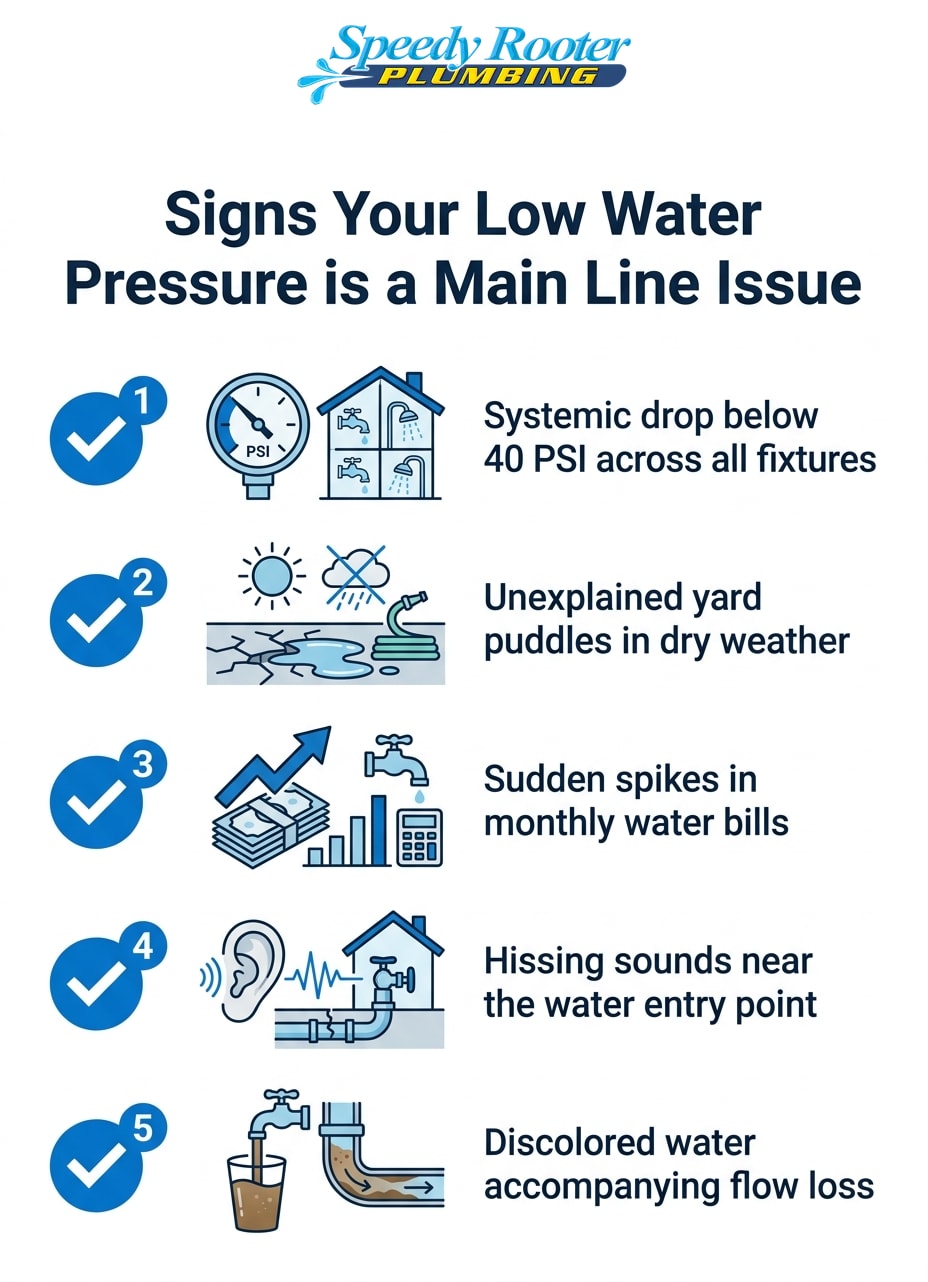
- Unexplained yard puddles: You may notice unusually lush patches of grass or muddy sinkholes in the yard, even during dry weather.
- Spiking utility bills: A sudden, unexplainable spike in the monthly water bill despite normal household usage is a massive red flag.
- Hissing or rushing sounds: A continuous hissing or rushing water sound coming from the point where the main line enters the home, even when no water is running inside.
- Discolored water: Brown, rusty, or sediment-heavy water accompanying a systemic pressure drop below 40 PSI on a standard residential system means dirt is entering the depressurized pipe.
- Flow drops with multiple fixtures: A noticeable, severe drop in flow when multiple fixtures (like a shower and washing machine) are run simultaneously.
How Environmental Stress and Ground Shifting Rupture Pipes
Underground pipes are constantly subjected to immense physical pressure from the soil above and around them. They are designed to withstand normal ground weight, but extreme environmental changes can push them beyond their breaking point. When exploring what causes pipe leaks, environmental factors are a leading culprit for sudden main line ruptures.
The Impact of Regional Climate and Soil
Based on our years of repairing underground plumbing, we’ve seen firsthand how Virginia’s specific soil expansion and contraction caused by seasonal freeze-thaw cycles and heavy rainfall acts as a primary physical stressor on buried utility lines. During heavy rains, the soil absorbs massive amounts of water and expands, pressing heavily against the pipe. When the ground dries out or freezes, it contracts, pulling away from the pipe and leaving it unsupported. This constant shifting bends and stresses the pipe material until it eventually snaps.
In older neighborhoods, mature landscaping poses another major threat. Tree root invasions in historic homes seek out microscopic pipe condensation. The roots wrap around the pipe, slowly crushing the line as they grow thicker. Once the pipe is breached, the resulting water loss immediately triggers a drop below 40 PSI on a standard residential system. The water escaping from the broken pipe then softens the surrounding soil even more, accelerating the shifting process and making the break even larger.
The Hidden Risks of Delaying Main Line Diagnostics
Ignoring a persistent drop below 40 PSI on a standard residential system is one of the most dangerous things a homeowner can do. While taking a weak shower is annoying, the real danger is happening out of sight. A ruptured main line allows thousands of gallons of pressurized water to erode the soil beneath your property every single day.
Erosion, Sinkholes, and Structural Damage
Continuous underground leaks wash away foundational support. As the water flows through the subterranean dirt, it carries soil particles away with it. Over weeks or months, this creates massive underground voids. Eventually, the surface ground collapses into these voids, leading to sinkholes or severe structural settling that can crack your home’s foundation slab.
Furthermore, excessive groundwater from a ruptured supply line can put intense hydrostatic pressure on nearby wastewater pipes. This pressure can crush older sewer lines, leading to severe cross-contamination where raw sewage mixes with the escaping fresh water. Homeowners should also be aware of the signs of a damaged sewer line, as severe ground shifting can easily compromise both systems simultaneously. Waiting to address the issue only multiplies the eventual repair requirements.
Pinpointing the Problem with Non-Invasive Leak Detection
Historically, finding a main line leak required destructive, exploratory digging across the entire front lawn. Plumbers would literally guess where the leak might be and start trenching through prized gardens, expensive hardscaping, and mature lawns until they found the wet spot. Thankfully, modern plumbing technology has completely revolutionized this process.
The Advantage of Modern Acoustic Technology
Today, professional plumbers utilize acoustic listening devices and thermal imaging to trace the exact source of the pressure loss. Professional, non-invasive leak detection technology is the critical pivot—showing how it saves your yard from unnecessary excavation. Highly sensitive microphones are placed along the ground above the suspected pipe path. These devices amplify the distinct, high-frequency sound of pressurized water escaping through a crack in the pipe.
These non-invasive methods can detect anomalies even when the water pressure has fallen far below 40 PSI on a standard residential system. By pinpointing the exact location and depth of the rupture without moving a single shovel full of dirt, technicians can perform targeted, trenchless repairs that preserve your landscaping and hardscaping. This approach minimizes disruption to your daily life and keeps your yard looking pristine while solving a massive underground failure.
The Professional Assessment: Mapping the Leak Without Digging
When our Speedy Rooter Plumbing technicians arrive to diagnose a sudden loss of water pressure, we follow a strict, systematic process to locate the exact point of failure. A professional assessment begins with ruling out municipal supply issues and verifying the home’s baseline pressure right at the meter.
The Diagnostic Process
- Verifying Baseline Pressure: Our technicians check the pressure at the street level to ensure the city supply has not dropped. If the city supply is strong, the problem is verified to be on the property.
- Isolating the Main Line: We isolate the main line from the rest of the home’s plumbing. By shutting off the main house valve and monitoring the meter, our team can confirm the drop below 40 PSI on a standard residential system is occurring underground, rather than inside the walls of the house.
- Deploying Acoustic Sensors: Advanced acoustic sensors are deployed along the path of the water line to listen for the distinct frequency of escaping water. Ground microphones pick up the vibrations traveling through the soil.
- Mapping and Planning: Once the exact location and depth are mapped using these sensors, we provide a clear, targeted plan for repair or replacement, focusing only on the damaged section of the pipe.
This methodical approach completely eliminates the guesswork. It ensures that the actual cause of the pressure drop is identified quickly and accurately, allowing for the most efficient repair possible.
Frequently Asked Questions About Main Line Water Pressure
Why is my water pressure suddenly low in the whole house?
A sudden, whole-house drop typically points to a compromised main water line, a failed Pressure Reducing Valve (PRV), or a municipal supply disruption. If your neighbors have normal pressure, the issue is isolated to your property’s plumbing system. A systemic drop below 40 PSI on a standard residential system requires immediate professional diagnostics to prevent secondary water damage to your foundation or yard.
How do you know if your main water line is leaking?
Look for unexplained yard puddles, a sudden spike in water bills, hissing sounds near the water entry point, and a systemic pressure drop below 40 PSI on a standard residential system. You might also notice a drop in water quality, such as rust-colored or sediment-heavy water coming from your taps. Since the line is buried, you rely on these secondary symptoms to signal a hidden underground rupture.
Can a water leak cause low water pressure?
Yes. When a pipe ruptures, the water escaping into the ground reduces the volume and force of the water making it to your fixtures. The larger the underground leak, the more severe the pressure loss will be inside the home. A major break will quickly cause the indoor flow to drop below 40 PSI on a standard residential system.
Who is responsible for the main water line?
In most municipalities, the homeowner is responsible for the portion of the main water line that runs from the property line or water meter into the house. The city or utility company is only responsible for the pipes leading up to the meter. If a leak causes the pressure to drop below 40 PSI on a standard residential system on your side of the meter, you must arrange for the repairs.
Is it safe to use water if I suspect a main line leak?
While the water may be safe, continuing to use the system can worsen the leak, cause further soil erosion, and increase the risk of contaminants entering the depressurized line. When pressure drops below 40 PSI on a standard residential system, groundwater and soil can actually siphon back into the broken pipe. It is best to shut off the main water supply and call for professional leak detection immediately.
Securing Your Home’s Water Supply with Expert Diagnostics
A systemic pressure drop below 40 PSI on a standard residential system is a clear signal that DIY troubleshooting is no longer sufficient. While it is always smart to check your aerators and shutoff valves first, a persistent, whole-house loss of water flow points to a much larger issue buried beneath your lawn. By understanding the difference between a clogged aerator and a main line rupture, homeowners can act quickly to prevent extensive property damage and massive utility bills.
Professional leak detection removes the guesswork and protects your landscaping from unnecessary digging. Modern acoustic and thermal technology allows experts to map the exact location of a pipe failure without tearing up your yard. If your home is experiencing a sudden, unexplainable loss of water flow, explore our professional leak detection options to pinpoint the problem. Clear, non-technical criteria to rule out simple DIY fixes, combined with a straightforward explanation of why professional leak detection is required, ensures your property remains safe and secure.
More From the Blog
-
How Line Locating Services Prevent Catastrophic Remodeling Mistakes
Starting a yard excavation or basement remodel without mapping utilities carries massive hidden risks. See why professional line locating is a critical first step before any shovel hits the dirt.
-
Thanksgiving Drain Backups: The Anatomy of a Kitchen Sink Failure
Preparing for the Predictable Thanksgiving Plumbing Surge Thanksgiving morning brings a flurry of activity, with multiple dishes cooking, guests arriving, and the…
-
Septic Tank Pumping Frequencies for Ruckersville, VA Rural Properties
The Hidden Threat to Ruckersville Septic Systems Nearly 20% of rural American homes rely on independent wastewater systems, but when it comes…











24/7 Emergency Service
Contact Us Today
Contact Us Today
When in need of basic and emergency plumbing services, call Speedy Rooter Plumbing. We are the team that you can trust for services from a reliable plumber in Charlottesville, VA, and nearby areas. We have a committed team of well-trained professionals waiting to address your needs. Call us today or fill out the form on this site to schedule your appointment.