

Why Rooter Service Estimates Are Never One-Size-Fits-All
If you are dealing with a severe drain backup, you are probably wondering about the real cost of rooter service: what determines the final invoice. Homeowners facing a sluggish drain or a complete plumbing stoppage often expect a simple flat fee to resolve the issue. However, the physical realities of residential plumbing systems are rarely that straightforward. Because every home is built differently and every blockage has a unique cause, applying a universal approach to drain clearing simply does not work.
Understanding the mechanical variables—such as the total line length, the severity of the blockage, and the difficulty of accessing the pipes—is crucial when evaluating a professional scope of work. A proper, thorough assessment determines exactly what specialized equipment and labor are required for your specific situation. This detailed evaluation protects your property from incomplete fixes that only offer temporary relief. Reviewing a detailed invoice helps clarify why specific interventions are necessary for your home’s unique plumbing architecture, rather than leaving you guessing about the required labor. To better understand the importance of sewer cleaning and how to permanently resolve sewer system rooting problems, you first need to understand the mechanical factors at play.
The Danger of Flat-Rate Drain Clearing Gimmicks
Advertisements promising a low, flat rate for any drain issue ignore the physical reality of diverse plumbing systems. These marketing tactics often treat a minor bathroom sink clog and a massive underground sewer stoppage as the exact same problem. A generic approach almost always fails to address the root cause of severe blockages. When technicians rely on basic tools to provide a quick, flat-rate fix, they often leave behind debris or structural damage, leading to recurring backups and repeated service calls.
Professionals who offer transparent assessments take a completely different approach. They evaluate the specific mechanical factors of your system before presenting a scope of work. This ensures that the proposed solution actually matches the severity of the problem. Understanding these variables helps homeowners avoid high-pressure tactics that try to force immediate, uninformed decisions. If you know how your system works, you are far less likely to fall for high-pressure sales pitches. Learning how plumber scams work during emergencies often starts with recognizing these unrealistic flat-rate promises.
Recognizing Red Flags in Plumbing Estimates
When evaluating a scope of work, certain warning signs indicate that a provider is not taking the physical realities of your plumbing into account. Look out for these common red flags:
- Lack of a pre-service camera inspection: If a technician attempts to clear a major line without looking inside first, they are operating blindly.
- Refusal to explain the blockage: You deserve to know the physical location and the exact nature of the obstruction.
- High-pressure commitments: Be wary of pressure to commit to extensive work without a detailed breakdown of the required labor and equipment.
Access Point Difficulty: Getting to the Core of the Problem
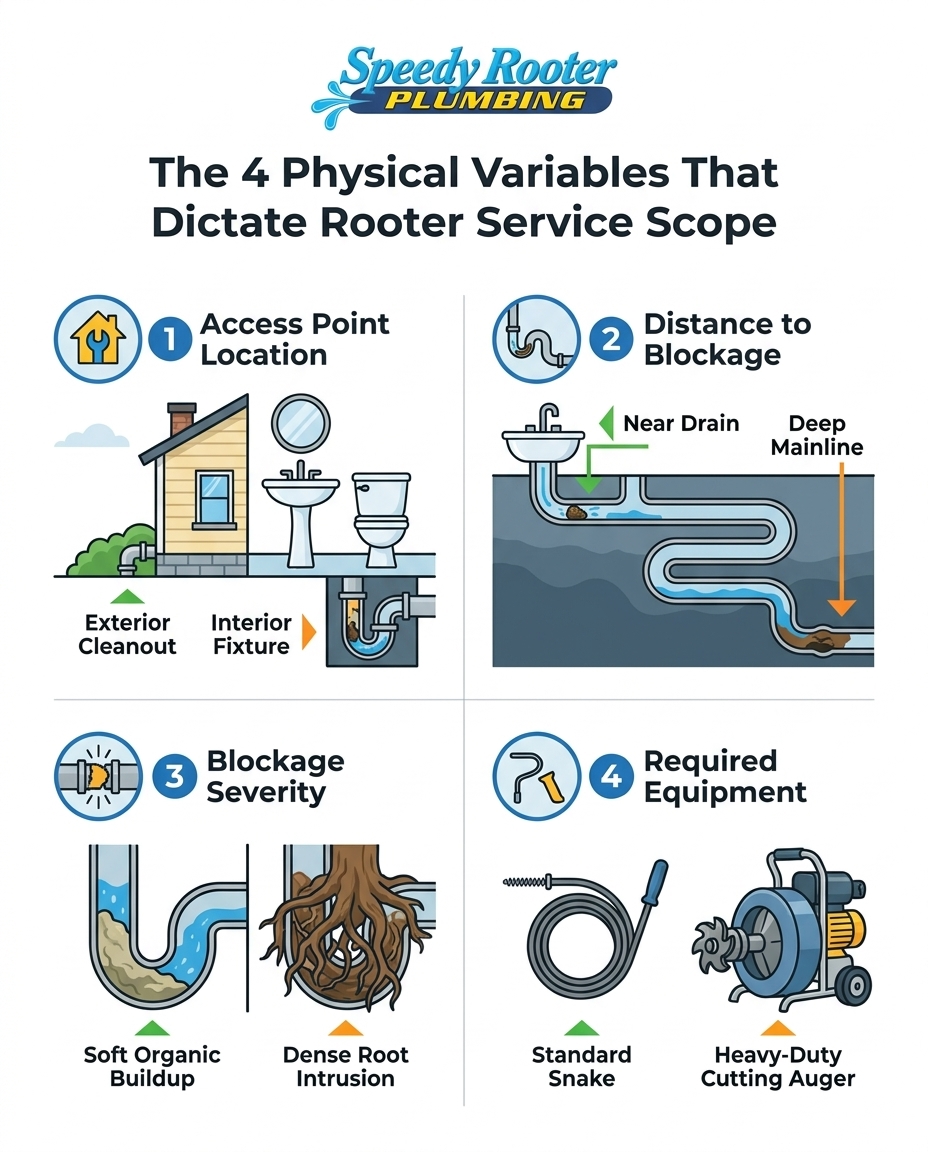
The first step in any rooter service is actually accessing the affected pipe, and this starting point varies wildly from home to home. The location and condition of your plumbing access point directly impact the labor required for the service. Homes that were built with a readily accessible exterior cleanout require significantly less preparatory labor. A technician can simply remove the cap in your yard and immediately begin deploying the necessary equipment.
However, when an exterior cleanout is unavailable, buried under landscaping, or heavily corroded, technicians may need to access the mainline through an interior fixture. This drastically changes the scope of the project. Pulling a toilet to reach the main drain line involves careful removal of the heavy porcelain fixture, specialized routing through the interior floor, and precise re-installation with a new wax ring. This process increases the overall scope of work because it requires meticulous care to prevent interior water damage and ensure the fixture operates perfectly once the job is done.
Exterior Cleanouts vs. Interior Access
The difference between working outside and working inside plays a massive role in how a professional approaches your plumbing system.
- Exterior cleanouts: These access points provide direct, safe entry for heavy, motorized equipment. Technicians can operate industrial-grade machinery without risking damage to your interior floors or walls.
- Interior access: Working inside requires extensive drop cloths, strict sanitary precautions, and careful maneuvering of heavy equipment through your hallways. The meticulous re-seating of fixtures is mandatory to prevent future leaks, adding significant time and labor to the assessment.
Distance Matters: Reaching Deep Mainline Blockages
Blockages rarely occur just a few feet down the drain; they are often buried deep within the property’s subterranean infrastructure. A clog that originates in the main sewer line might be located near the street connection, far away from the foundation of your house. Because of this vast distance, standard household snakes are only effective for minor, localized clogs located near the immediate fixture. They lack the length and the structural integrity to reach deep underground.
When a professional encounters a 75-foot mainline root intrusion, standard tools are completely useless. This type of severe blockage requires specialized, extended-length cables to properly reach and clear the obstruction. The deeper the blockage is located within the system, the more mechanical force and time are required to safely navigate the pipe’s bends, joints, and natural slopes. Operating heavy-duty equipment over long distances requires careful tension management and expert handling to ensure the pipe walls are not damaged during the clearing process. The total distance to the clog is a primary factor in determining the required effort and equipment.
Blockage Severity and Equipment Selection
Not all clogs are created equal. A buildup of soft materials requires a vastly different intervention than dense, structural intrusions. Soft blockages, such as accumulated grease, soap scum, or hair, can often be cleared with standard cabling or high-pressure hydro-jetting. These materials yield easily to basic mechanical force or water pressure, allowing flow to be restored relatively quickly.
However, when dealing with severe structural blockages, the choice between a heavy-duty cutting auger vs. standard snake dictates the success of the entire job. Tree roots exert immense pressure on underground pipes, constantly seeking moisture and nutrients. Once they breach a pipe joint, they grow rapidly, creating a dense, woody mass that completely blocks water flow. Clearing this type of intrusion demands robust, motorized cutting blades that can sheer through thick organic matter without destroying the surrounding pipe wall. Knowing when to schedule a sewer cleaning often depends on understanding what type of blockage is forming underground.
Matching the Tool to the Intrusion
Professional drain clearing requires selecting the exact right tool for the specific physical obstruction.
| Type of Blockage | Characteristics | Required Equipment | Impact on Scope of Work |
|---|---|---|---|
| Soft Organic Buildup | Grease, food waste, or hair clogs located near fixtures. | Standard snake or basic auger cable. | Minimal labor; generally resolved quickly with basic tools. |
| Heavy Sludge / Scale | Thick, sticky buildup along the entire length of the pipe walls. | Hydro-jetting equipment. | Moderate labor; requires specialized water pressure systems. |
| Dense Root Intrusion | Thick, woody tree roots growing through pipe joints. | Heavy-duty cutting auger. | Intensive labor; requires heavy machinery and careful cutting. |
Environmental Factors: How Ground Shifting Impacts Your Lines
Underground plumbing is constantly subjected to environmental pressures that can accelerate wear and tear. While pipes are designed to be durable, the soil surrounding them is always in motion. Changes in local weather directly influence soil stability around your main sewer line. When the ground shifts, it takes the plumbing infrastructure with it.
Heavy rain or sudden freezes cause the ground to shift dramatically. Saturated soil becomes heavy and expands, while freezing temperatures cause the earth to contract and heave. These weather-induced shifts put immense pressure on aging pipes, often causing them to crack, offset, or separate at the joints. Once a joint is compromised, it invites aggressive root intrusion. What might have started as a minor vulnerability quickly turns into a severe blockage under these environmental conditions. These natural shifts expand the necessary scope of professional intervention, as technicians must not only clear the resulting blockage but also assess the structural integrity of the newly shifted pipe.
Translating the Assessment into a Transparent Scope of Work
A professional assessment should clearly outline the physical realities discovered during the diagnostic phase. Trustworthy providers ensure that their assessment translates directly into a transparent scope of work, protecting the customer from hidden fees. The final invoice is simply a reflection of the access difficulty, the distance to the clog, and the specialized equipment deployed to solve the problem.
Homeowners should expect a thorough explanation of these variables. A transparent professional will walk you through exactly what is required to restore flow safely and effectively. This honest approach empowers the property owner to make informed decisions without fear of surprise charges at the end of the service. Knowing what to expect during sewer repair starts with understanding how to read these assessments.
Here is how a transparent scope of work is typically built:
- Camera Inspection Findings: The technician visually verifies the location and severity of the blockage.
- Access Determination: The professional identifies whether an exterior cleanout is viable or if interior fixture removal is necessary.
- Equipment Selection: Based on the inspection, the technician selects the appropriate mechanical tools, such as a heavy-duty cutting auger.
- Labor Calculation: The time required to safely navigate the distance and clear the specific type of blockage is factored into the final assessment.
Frequently Asked Questions About Rooter Service Assessments
What is included in a professional rooter service?
A professional rooter service includes a thorough diagnostic assessment, the mechanical clearing of the blockage, and a verification process to ensure flow is restored. Technicians evaluate the physical variables of your system to determine the safest and most effective method for clearing the pipes. The service scope covers everything from accessing the line to deploying specialized equipment and cleaning up the work area.
Why do rooter services require different specialized equipment?
Different blockages require different levels of mechanical force. A soft clog made of grease and soap scum can often be pushed through with a standard cable or washed away with water pressure. Conversely, a dense structural blockage, like thick tree roots, requires heavy-duty cutting blades attached to motorized augers to physically sheer the obstruction apart without damaging the pipe.
How does the plumbing access point affect the scope of work?
The access point determines how much preparatory and restorative labor is required. Utilizing an exterior cleanout is straightforward and keeps heavy equipment outside. If a technician must access the line by pulling an interior toilet, they must take extensive sanitary precautions, carefully remove the fixture, and meticulously reinstall it with new seals to prevent future leaks.
What dictates the mechanical requirements of a rooter service assessment?
The primary mechanical variables include the physical distance to the clog, the structural severity of the blockage, and the accessibility of the pipe. A blockage located 75 feet underground requires longer, heavier cables and more powerful motors than a clog located just a few feet beneath a sink.
How do plumbers safely clear deep main sewer lines?
Professionals use specialized, extended-length cables powered by motorized drum machines. They carefully manage the tension and torque of the cable as it navigates the bends and natural slopes of the underground pipe. This controlled mechanical force allows them to reach and break apart deep blockages without compromising the integrity of the pipe walls.
Why is a camera inspection critical before clearing a severe blockage?
A camera inspection eliminates the guesswork by providing a clear visual of the pipe’s interior. It allows the technician to identify exactly what is causing the blockage, verify the structural condition of the pipe, and select the correct equipment for the job. Operating heavy machinery without a camera inspection risks causing severe damage to an already compromised line.
Making an Informed Decision for Your Home’s Plumbing
A clear, logical breakdown of physical variables allows homeowners to evaluate their service options confidently. Understanding how access point difficulty, distance, and blockage type influence the required labor removes the mystery from plumbing assessments. You no longer have to rely on guesswork or trust unrealistic flat-rate promises when you understand the mechanical realities of your own home.
When an underground system fails, partnering with a transparent professional is the right next step. A trustworthy provider will always explain the ‘why’ behind the work, ensuring you understand exactly what is necessary to protect your property. By focusing on the physical mechanics of the job, you can better understand the real cost of rooter service: what determines the final invoice. Explore professional sewer system rooting options to ensure your home receives the exact level of care it needs, based on honest assessments and proven solutions.
More From the Blog
-
How Line Locating Services Prevent Catastrophic Remodeling Mistakes
Starting a yard excavation or basement remodel without mapping utilities carries massive hidden risks. See why professional line locating is a critical first step before any shovel hits the dirt.
-
Thanksgiving Drain Backups: The Anatomy of a Kitchen Sink Failure
Preparing for the Predictable Thanksgiving Plumbing Surge Thanksgiving morning brings a flurry of activity, with multiple dishes cooking, guests arriving, and the…
-
Septic Tank Pumping Frequencies for Ruckersville, VA Rural Properties
The Hidden Threat to Ruckersville Septic Systems Nearly 20% of rural American homes rely on independent wastewater systems, but when it comes…











24/7 Emergency Service
Contact Us Today
Contact Us Today
When in need of basic and emergency plumbing services, call Speedy Rooter Plumbing. We are the team that you can trust for services from a reliable plumber in Charlottesville, VA, and nearby areas. We have a committed team of well-trained professionals waiting to address your needs. Call us today or fill out the form on this site to schedule your appointment.