


Preparing for the Predictable Thanksgiving Plumbing Surge
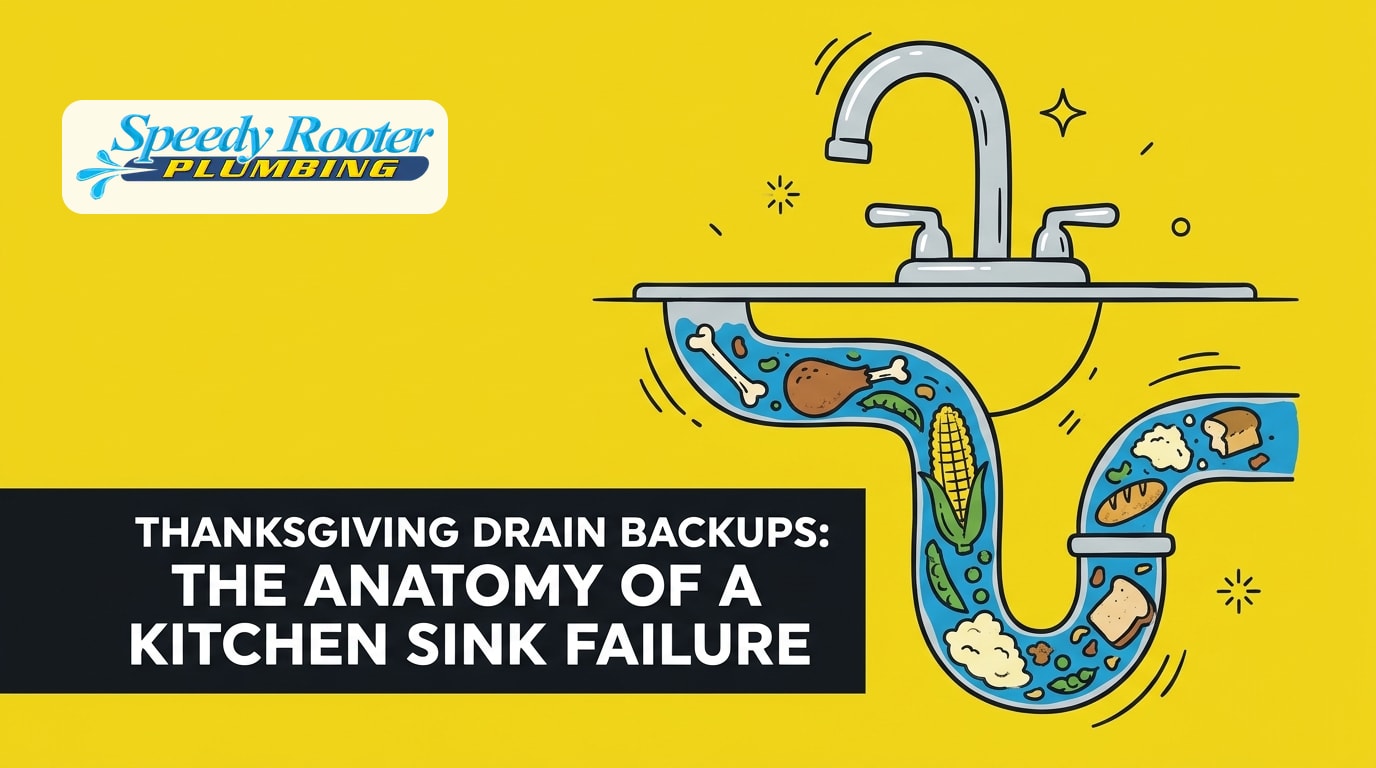
Thanksgiving morning brings a flurry of activity, with multiple dishes cooking, guests arriving, and the kitchen operating at maximum capacity. Amidst the chaos, your plumbing system takes on a massive, sudden workload. If you want to prevent Thanksgiving drain backups: the anatomy of a kitchen sink failure reveals that these holiday disasters are rarely random accidents. Instead, they are predictable mechanical failures caused by a specific combination of heavy volume and incompatible food waste.
The infamous Thanksgiving and Black Friday plumbing surge is not just an industry joke. It is a documented reality we see firsthand at Speedy Rooter Plumbing. Every late November across the local area, plumbing systems that function perfectly well during normal daily use are suddenly overwhelmed by an influx of turkey grease, potato peels, and fibrous vegetable scraps. Your standard residential kitchen sink and garbage disposal are simply not engineered to process industrial volumes of dense, sticky, or stringy organic matter all at once.
Understanding the actual mechanics of a clog helps you make better disposal decisions while you cook. A blockage does not form instantly; it builds up through a chain reaction of poor waste management, cold temperatures, and pre-existing pipe conditions. When you know how these elements interact, you can stop a clog before it starts.
Developing proactive habits in the kitchen is your first line of defense. Simple changes to how you scrape plates, rinse pans, and operate your garbage disposal can mean the difference between a relaxing holiday evening and a frantic call for emergency service. For homeowners who want to start the season with a clean slate, scheduling regular drain cleaning before the heavy cooking begins removes the hidden vulnerabilities that holiday waste exploits.
How Cold Pipes and Existing Buildup Trap Holiday Grease
To understand why kitchen sinks fail so spectacularly on Thanksgiving, you have to look at the physical and chemical interactions happening deep inside your plumbing. As our technicians often explain to homeowners, your pipes are rarely as clean on the inside as you might think. Over months of normal use, a sticky, organic sludge accumulates along the interior walls of your plumbing.
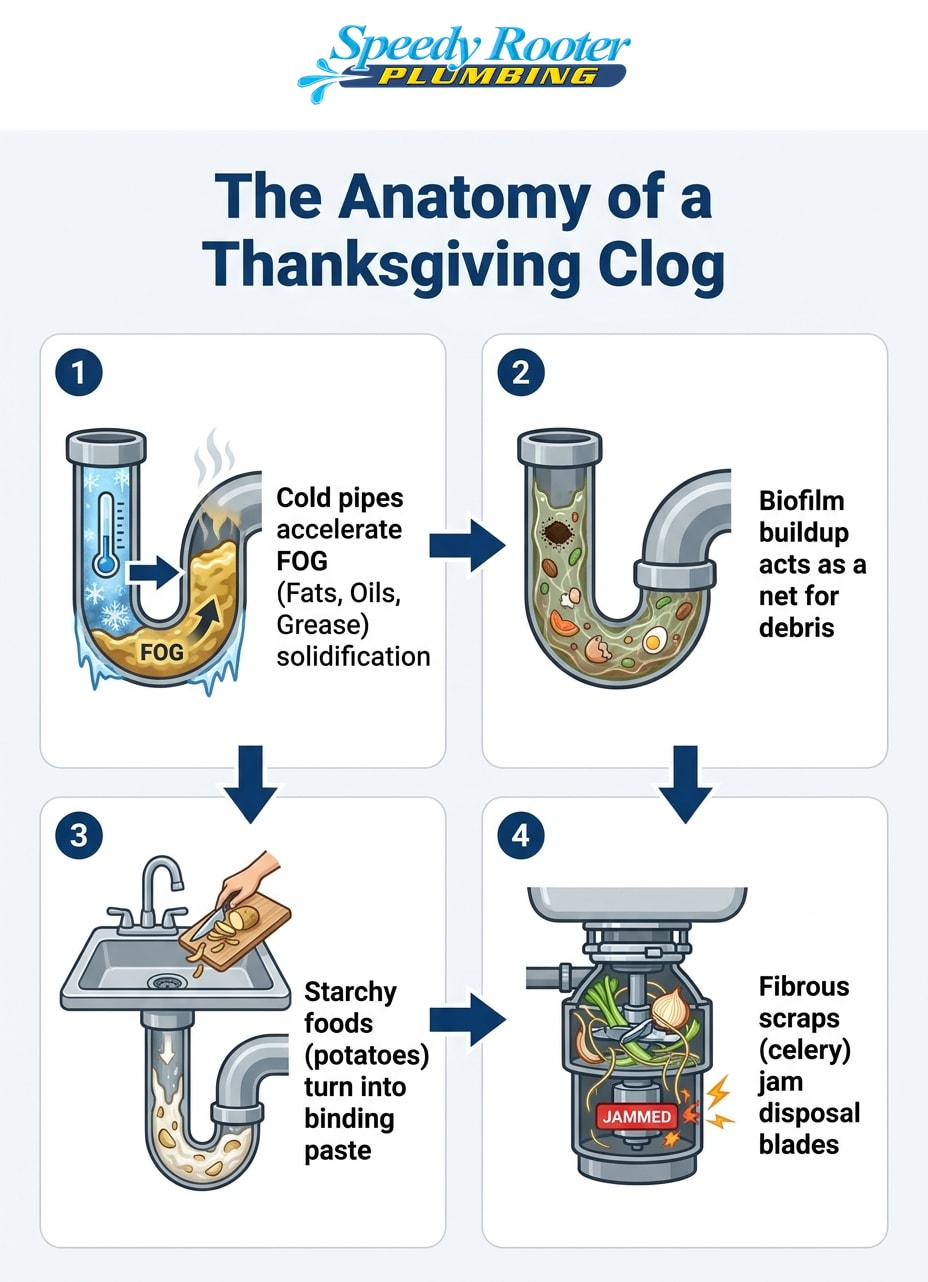
This existing buildup, often referred to as biofilm in drain lines, acts like a net. It creates a textured, adhesive surface that catches small food particles, coffee grounds, and soap scum. During normal daily use, this buildup might only cause a slightly sluggish drain. But during a heavy holiday cooking session, it becomes the foundation for a complete blockage.
The situation is compounded by regional climate factors. As late-fall weather sets in across the local area, the ground temperatures and the ambient temperature of your home’s exterior walls drop significantly. This means the pipes carrying your wastewater are much colder than they are during the summer months. When hot, liquid fats enter this chilled environment, a rapid physical transformation occurs.
The Role of FOG (Fats, Oils, and Grease)
Fats, oils, and grease (FOG) are the primary catalysts for the Thanksgiving and Black Friday plumbing surge. The most common offenders during the holidays include:
- Turkey drippings: The heavy, rich fat rendered from roasting poultry.
- Butter and heavy cream: Dairy fats used heavily in mashed potatoes and casseroles.
- Cooking oils: Leftover oils from frying or sautéing vegetables.
- Gravy residue: Thickened sauces that congeal quickly as they cool.
There is a widespread misconception that running hot water while pouring grease down the drain prevents it from solidifying. This is entirely false. Hot water only keeps the grease liquid for a few seconds. The moment that liquid fat travels past the warm sink basin and hits the cold pipes beneath your house, it congeals almost immediately.
Once the grease solidifies, it binds with the existing organic buildup on the pipe walls. This creates a thick, waterproof barrier that continues to trap new debris until the pipe is completely sealed shut.
| Factor | Summer Plumbing Conditions | Late-Fall (Thanksgiving) Conditions |
|---|---|---|
| Pipe Temperature | Warm ambient temperatures keep pipes insulated. | Cooler ground and wall temperatures chill the pipes. |
| Grease Behavior | Fats travel further down the line before solidifying. | Fats congeal almost immediately upon contact with cold pipes. |
| Waste Volume | Standard daily meals generate manageable waste. | Holiday cooking triples the amount of FOG entering the system. |
| Blockage Risk | Low to moderate, usually building up slowly. | Extremely high, capable of forming a solid block in hours. |
Why Fibrous Foods and Starch Break the Garbage Disposal
The Problem: Even if you manage your grease perfectly, your garbage disposal still faces a massive threat from the actual food scraps generated during a Thanksgiving feast. Standard residential garbage disposals are designed to handle light, incidental food waste—the small scraps left on a plate after a meal. They are not industrial woodchippers designed to process pounds of raw vegetable waste.
The Cause: The worst offenders are the very foods that make up the bulk of a holiday meal. Potato peels, celery stalks, onion skins, and poultry bones put immense mechanical and chemical strain on your disposal unit. This strain is one of the leading causes of drain backups during the holidays.
When you feed starchy foods like potato peels or pasta down the disposal, a chemical transformation takes place. The grinding action breaks the cell walls of the potatoes, releasing heavily concentrated starches. When mixed with water, this starch turns into a thick, glue-like paste. This paste coats the inside of the disposal unit and the drain pipes, acting as a binding agent that holds congealed grease and other food particles together.
Fibrous foods present a different kind of physical challenge. A garbage disposal does not actually have sharp blades; it uses blunt metal impellers on a spinning plate to force food against a grinding ring. Stringy foods like celery, onion skins, and corn husks cannot be mashed by these impellers. Instead, the tough fibers separate and wrap tightly around the impeller shaft. As more fibers accumulate, they restrict the spinning plate, eventually causing the motor to jam, overheat, and trip its internal breaker.
The Solution: The only reliable way to prevent these mechanical and chemical failures is to keep these specific foods out of the sink entirely. Scrape all potato peels, vegetable trimmings, and bones directly into the trash or a compost bin before the plates ever reach the sink basin.
High-Volume Meal Prep: Pushing Residential Systems Past Their Limits
The sheer volume of activity on Thanksgiving Day is what ultimately pushes a vulnerable plumbing system over the edge. A typical Thanksgiving meal prep generates up to three times the normal daily volume of residential kitchen waste. This volume is not spread out over a week; it is condensed into a single six-to-eight-hour window of intense cooking and cleaning.
Continuous use of the sink and disposal prevents the system from properly clearing itself. Under normal circumstances, you might use the disposal for a few seconds, run some water, and allow the pipes to flush completely before using the sink again. On Thanksgiving, the sink is in constant use. Water, soap, grease, and food scraps are continuously poured down the drain, creating a traffic jam inside the pipes. The wastewater never gets a chance to fully evacuate to the main sewer line before the next wave of debris is introduced.
A pattern we see often is that this sudden volume spike rapidly exposes pre-existing sluggish drains that previously went unnoticed. A pipe that is already 60% blocked by old buildup might drain normally when you wash a few breakfast dishes. But when you introduce gallons of starchy potato water and greasy roasting pan runoff, that remaining 40% of pipe capacity is instantly overwhelmed, resulting in a sudden backup.
Because of this, pacing your disposal use is critical. A key step in preparing your plumbing for the holidays is changing your workflow. Do not wait until the sink is full of scraps to turn on the disposal. Process small amounts of compatible food waste gradually, and always prioritize scraping plates directly into the trash can. By managing the volume of waste entering the system at any given moment, you give your pipes the time they need to flush debris away safely.
Actionable Disposal Rules to Keep Your Kitchen Sink Clear
Preventing the Thanksgiving and Black Friday plumbing surge requires strict adherence to a few basic kitchen rules. By treating your sink as a liquid-only exit rather than a trash can, you can keep your drains flowing freely throughout the holiday weekend.
Follow this actionable checklist to protect your plumbing during high-volume meal prep:
- Use a mesh drain strainer: Place a simple, inexpensive mesh strainer over your drain while peeling vegetables or rinsing dishes. This catches stray food particles, rice, and vegetable strings before they can enter the disposal unit. Empty the strainer into the trash frequently.
- Wipe greasy pans with paper towels: Before washing roasting pans, skillets, or plates in the sink, wipe them down thoroughly with a dry paper towel. This removes the thin layer of surface grease that would otherwise wash down the drain and congeal in your cold pipes.
- Dispose of turkey grease in the trash: Never pour rendered turkey fat, bacon grease, or cooking oil down the drain. Pour warm (not boiling) liquid fats into a sealed container, such as an empty coffee can or a glass jar. Let it solidify on the counter or in the fridge, then throw the entire container into the garbage.
- Run cold water for 15 seconds: Always use cold water when operating the garbage disposal. Cold water keeps any residual fats in a solid state, allowing the disposal to chop them up and flush them away. Run the cold water for 15 seconds before turning the disposal on, keep it running during operation, and let it run for another 15 seconds after turning the unit off to ensure the ground particles are pushed completely through the trap.
- Avoid the “expansion” foods: Keep rice, pasta, oatmeal, and bread out of the disposal. These foods absorb water and expand significantly inside your pipes, creating a dense, sponge-like blockage that traps other debris.
- Never use chemical drain cleaners on a complete blockage: If the sink does start to back up, do not pour harsh chemical drain openers into standing water. These chemicals generate immense heat that can warp PVC pipes or eat through older metal plumbing, and they rarely dissolve a dense Thanksgiving clog.
Recognizing When a Sluggish Drain Requires Professional Intervention
Even with the best preventative measures, a chaotic kitchen can sometimes lead to an accidental backup. Knowing how to react—and more importantly, knowing when to stop trying to fix it yourself—can save your plumbing from severe damage.
The warning signs of a deep pipe blockage usually start subtly. You might notice that water drains slower than usual, or you might hear a gurgling sound coming from the drain after the sink empties. A clear indicator of a deep clog in a double-basin sink is when water backs up into the second basin while you run the disposal in the first. Foul odors resembling rotting food or sewage emanating from the drain are also major red flags that debris is decaying inside the pipes rather than washing away.
When faced with a backup, many homeowners immediately reach for a plunger or chemical cleaners. However, our team typically sees that DIY plunging often packs a grease and starch clog tighter, acting like a hydraulic press that forces the blockage deeper into the plumbing system. Chemical cleaners are equally problematic; they sit on top of the dense blockage, generating heat that can warp or melt residential pipes without actually clearing the obstruction.
If water is completely stagnant and will not drain, or if multiple fixtures in the kitchen are backing up simultaneously, you are likely dealing with a deep mainline clog. Cabling a deep mainline clog or safely dismantling a jammed garbage disposal requires a licensed professional. Attempting to snake a drain yourself can easily puncture older pipes or permanently damage the disposal’s motor housing.
This is where having a reliable team matters. Dealing with common plumbing emergencies requires swift action, especially when you have a house full of guests. Our expert crew at Speedy Rooter Plumbing provides rapid emergency response capabilities, acting as the ultimate safety net for hosts facing a sudden holiday plumbing disaster. When preventative measures fail, a professional technician has the heavy-duty augers and hydro-jetting equipment necessary to safely break apart stubborn grease and starch blockages, restoring your kitchen to full working order.
Frequently Asked Questions
Why is the day after Thanksgiving the busiest day for plumbers?
The day after Thanksgiving, often called “Brown Friday” in the plumbing industry, sees a massive spike in service calls due to kitchen sink and garbage disposal failures. At Speedy Rooter Plumbing, our phones ring off the hook because the sudden influx of heavy food waste, turkey grease, and continuous sink usage overwhelms residential plumbing systems that are only designed for light daily loads. Plumbers spend the day clearing densely packed clogs made of starchy vegetables and congealed fats.
Why do drains clog so easily on Thanksgiving?
Drains clog easily on Thanksgiving because the volume and type of waste change drastically. Homeowners often put fibrous vegetables, potato peels, and grease down the sink all at once. This combination mixes with existing organic buildup in the pipes, forming a thick, impenetrable paste that stops water flow completely.
How does grease cause a pipe blockage in cold weather?
In late fall, the ground and exterior walls of your home are much colder, which chills your plumbing pipes. When hot, liquid grease is poured down the drain, it hits these cold pipes and solidifies almost instantly. This hardened fat sticks to the pipe walls, catching other food particles and rapidly building into a solid blockage.
What specific foods break a garbage disposal?
Fibrous and starchy foods are the primary culprits for broken garbage disposals. Potato peels turn into a thick, gluey paste that coats the mechanics, while stringy foods like celery, onion skins, and corn husks wrap tightly around the impeller blades. Hard items like poultry bones can also jam the spinning plate and burn out the disposal’s motor.
Can I pour turkey grease down the drain if I use boiling water?
No, pouring boiling water behind turkey grease does not prevent a clog. The boiling water only keeps the grease liquid for a few moments while it passes through the immediate sink area. Once the grease travels further down into the colder main sewer lines beneath your home, it will solidify and cause a severe blockage deep in your plumbing.
How do I know if my kitchen sink clog requires a professional?
You should call a professional if water is backing up into both sink basins, if the drain is completely stagnant, or if you hear gurgling sounds from other fixtures. If basic clearing methods fail, do not use chemical drain cleaners or attempt to cable a deep mainline yourself, as this can severely damage your pipes. A licensed professional has the proper tools to safely extract the blockage.
Protect Your Kitchen This Holiday Season
Surviving the Thanksgiving / Black Friday plumbing surge comes down to respecting the limits of your residential plumbing system. By keeping grease in the trash, scraping fibrous foods off plates, and pacing your disposal use, you can avoid the dreaded holiday backup. If you do encounter a stubborn blockage, don’t let it ruin your weekend. Schedule your service early and rely on our rapid professional response to keep your kitchen running smoothly.
More From the Blog
-
How Line Locating Services Prevent Catastrophic Remodeling Mistakes
Starting a yard excavation or basement remodel without mapping utilities carries massive hidden risks. See why professional line locating is a critical first step before any shovel hits the dirt.
-
Septic Tank Pumping Frequencies for Ruckersville, VA Rural Properties
The Hidden Threat to Ruckersville Septic Systems Nearly 20% of rural American homes rely on independent wastewater systems, but when it comes…
-
Decoding Low Water Pressure: When the Problem is Your Main Line
Diagnosing a System-Wide Drop in Water Pressure You turn on the shower to get ready for the day, but only a weak…












24/7 Emergency Service
Contact Us Today
Contact Us Today
When in need of basic and emergency plumbing services, call Speedy Rooter Plumbing. We are the team that you can trust for services from a reliable plumber in Charlottesville, VA, and nearby areas. We have a committed team of well-trained professionals waiting to address your needs. Call us today or fill out the form on this site to schedule your appointment.